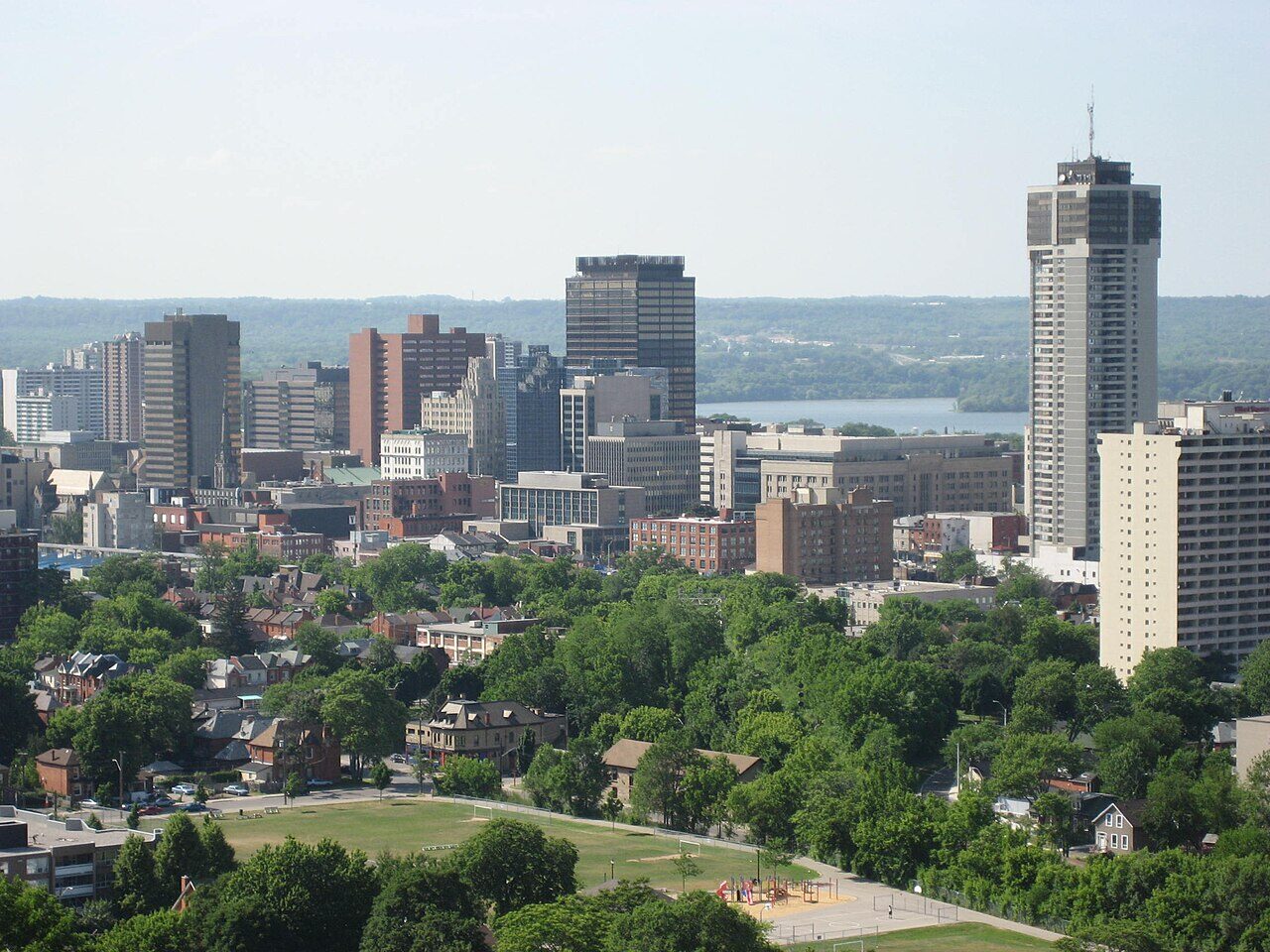
A steel-built, waterfall-laced, garden-rich city on the edge of the Niagara Escarpment — and the birthplace of Canada's labour movement. Here's how to make the most of your stay.
We wish to acknowledge this land on which we gather. For thousands of years it has been the traditional territory of the Erie, Neutral, Huron-Wendat, Haudenosaunee and Mississaugas.
This land is covered by the Dish With One Spoon Wampum Belt Covenant, which was an agreement between the Haudenosaunee and Anishinaabek to share and care for the resources around the Great Lakes.
We further acknowledge that this land is covered by the Between the Lakes Purchase, 1792, between the Crown and the Mississaugas of the Credit First Nation. We recognize and deeply appreciate the historic connections of Indigenous peoples and their contributions in shaping and strengthening our province and our country.
As settlers we are committed to the promise of Truth and Reconciliation, partnership, and enhanced understanding.
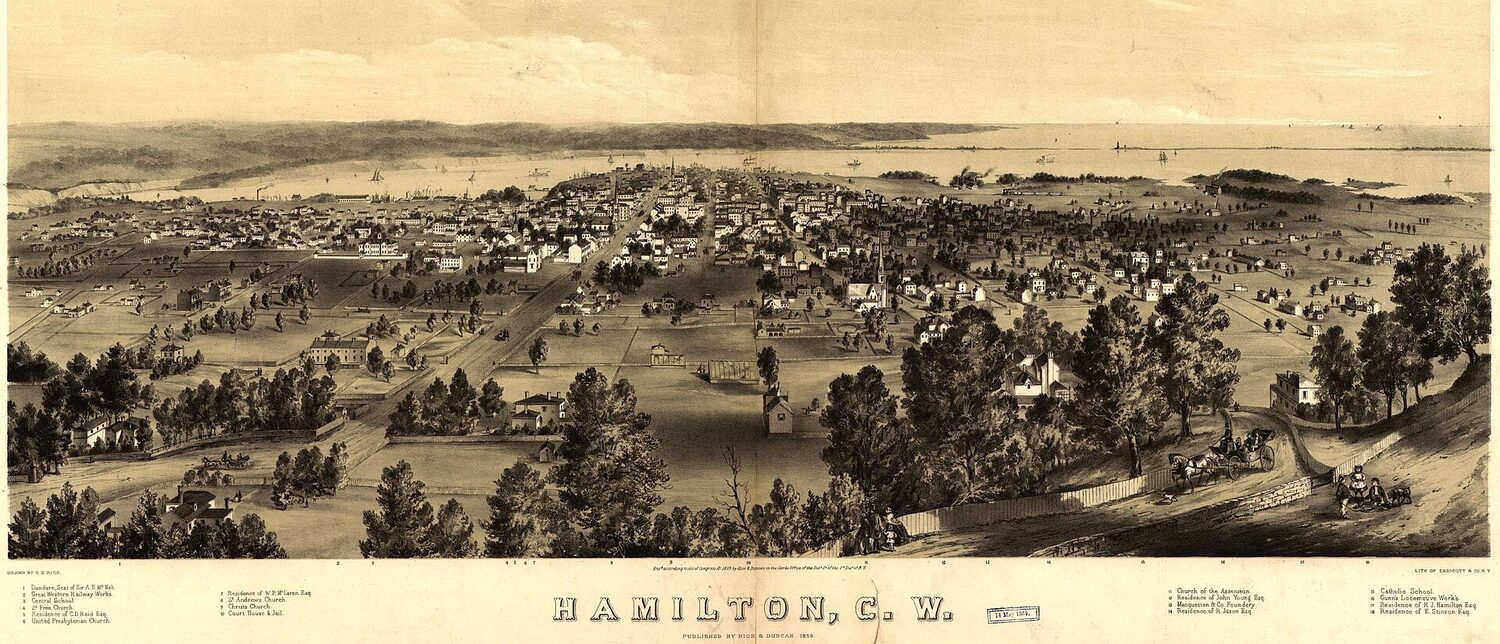
You are standing in the cradle of organized labour in Canada. Hamilton built the country's first local labour council in 1864 and launched the nine-hour-workday movement in 1872 — and over the century and a half since, this has been a city of steel strikes, labour mayors, and, for the teachers in the room, the long campaign that won educators a real seat at the table. Here is a little of that story.

Hamilton organized before anyone else. In 1864 the Iron Molders' Union led the city's trade unions into the Hamilton Trades Assembly — the first local labour council in Canada, and the seedbed of everything that followed.
Learn more →Hamilton workers met at the Shakespeare Hotel and founded the Nine-Hour League — Canada's first working-class organization for a shorter workday. On May 15, some 1,500 of them marched five miles past the city's factories, remembered ever since as the “Nine-Hour Pioneers.”
Learn more →
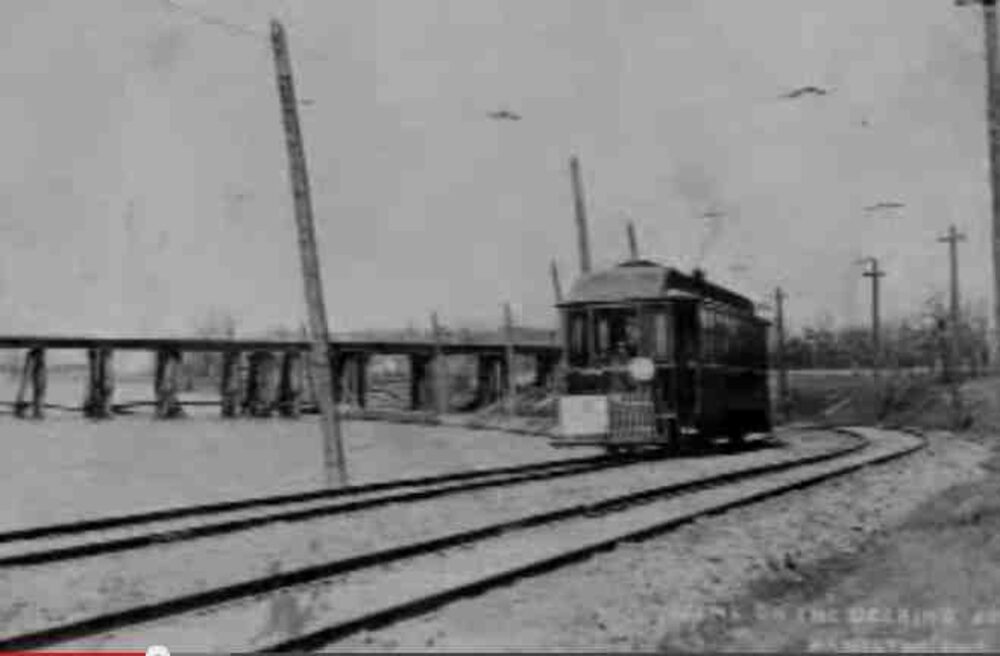
When the streetcar company broke an arbitrated settlement, Hamilton's carmen struck — to overwhelming public support. The Riot Act was read downtown, and the workers won their union.
Learn more →Hamilton got its own teacher-training college. The Hamilton Normal School opened March 19, 1909 in the city's West End, preparing generations of elementary teachers for nearly half a century — until fire destroyed it on New Year's Eve, 1953. Among those it trained: a young Mary Flynn, who would go on to lead OECTA province-wide.
Learn more →
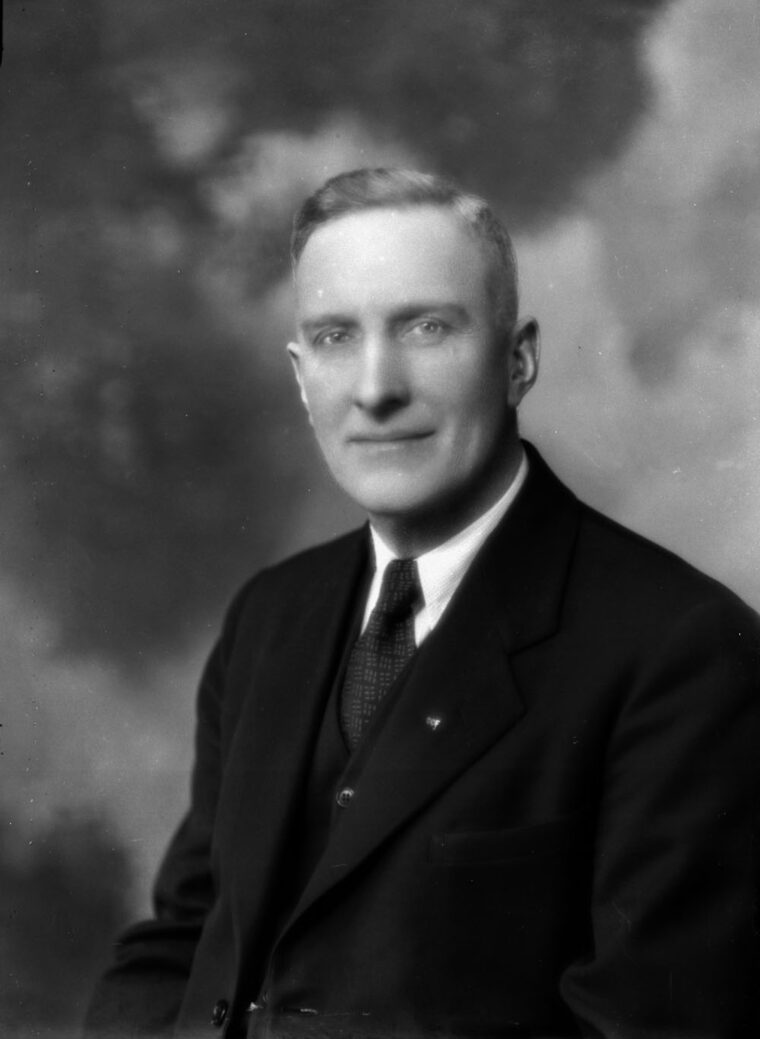
Stonecutter Sam Lawrence took office as Hamilton's first labour mayor. And that February, English Catholic teachers founded OECTA — the association whose Council of Presidents you lead today. Hamilton was there from day one as charter district No. 7, and within a year the city's own Father Bernard Harrigan became OECTA's second provincial president.
Learn more →
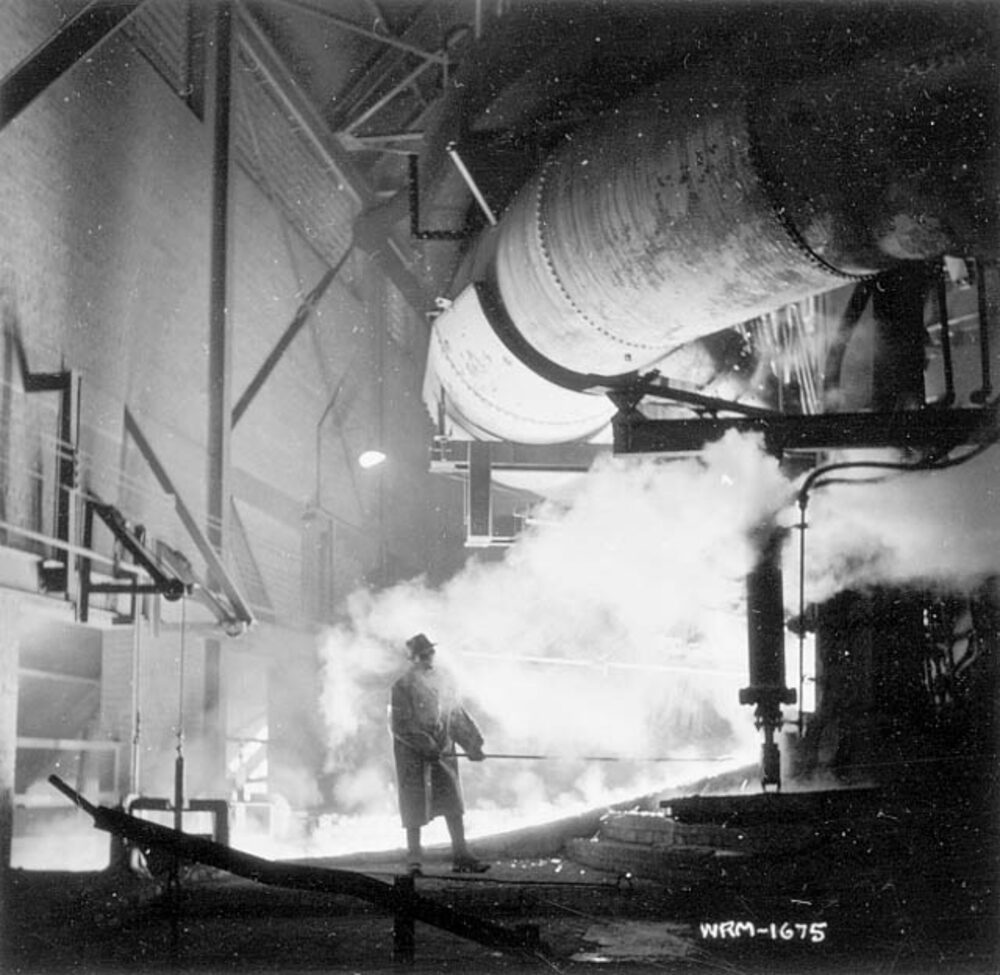
Steelworkers struck Stelco for 81 days; with Westinghouse and Firestone out too, some 13,000 Hamiltonians walked. Mayor Lawrence refused to send in police and marched with thousands to the gates — a milestone widely credited with helping win recognition for USW Local 1005 and the 40-hour week.
Learn more →
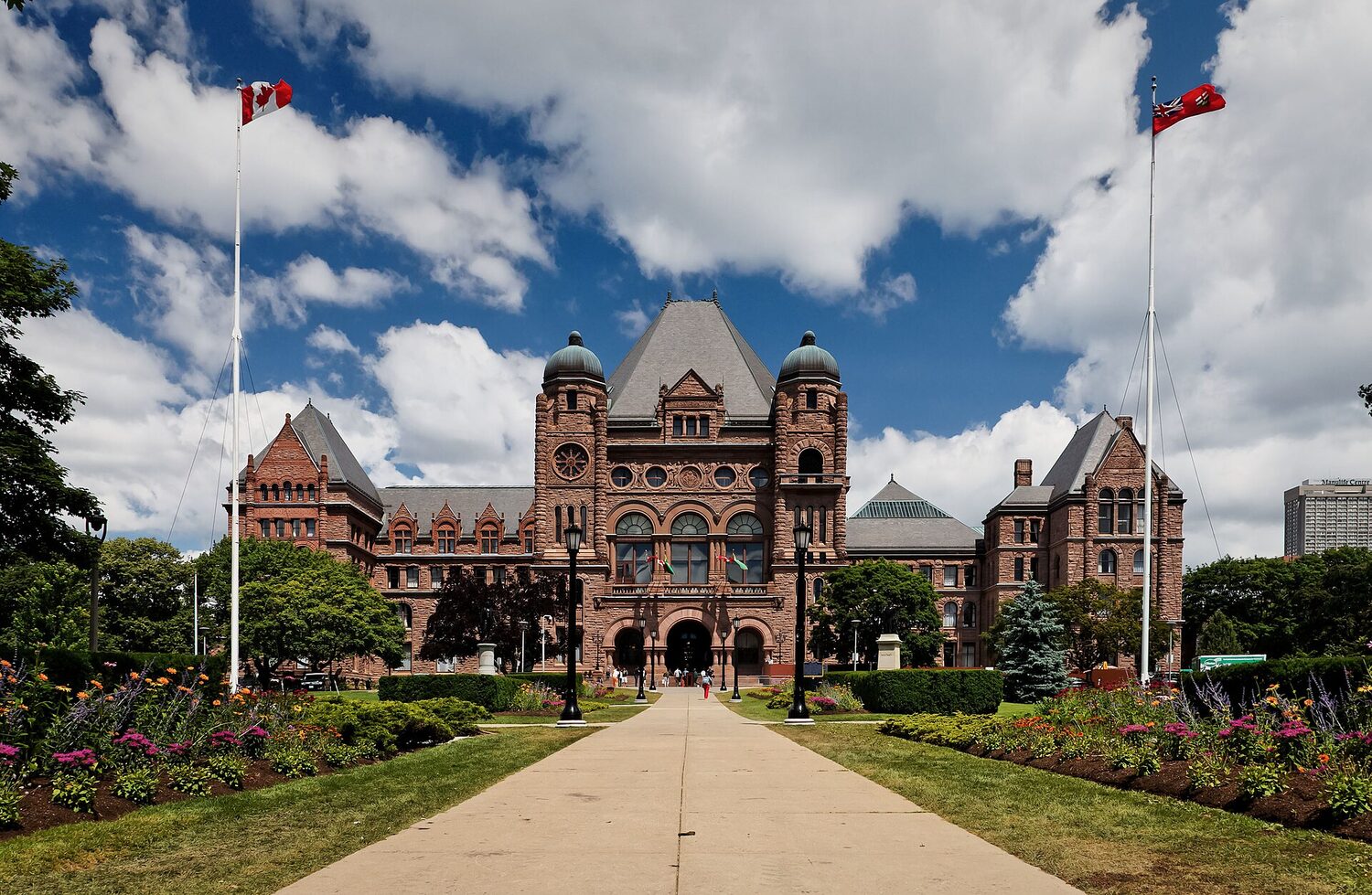
On December 18, some 90,000 of Ontario's 105,000 teachers — OECTA among them — walked out, closing schools in Hamilton — where Wentworth teachers had already been working to rule — and across the province. Two years later, Bill 100 gave Ontario teachers full collective bargaining and the right to strike.
Learn more →
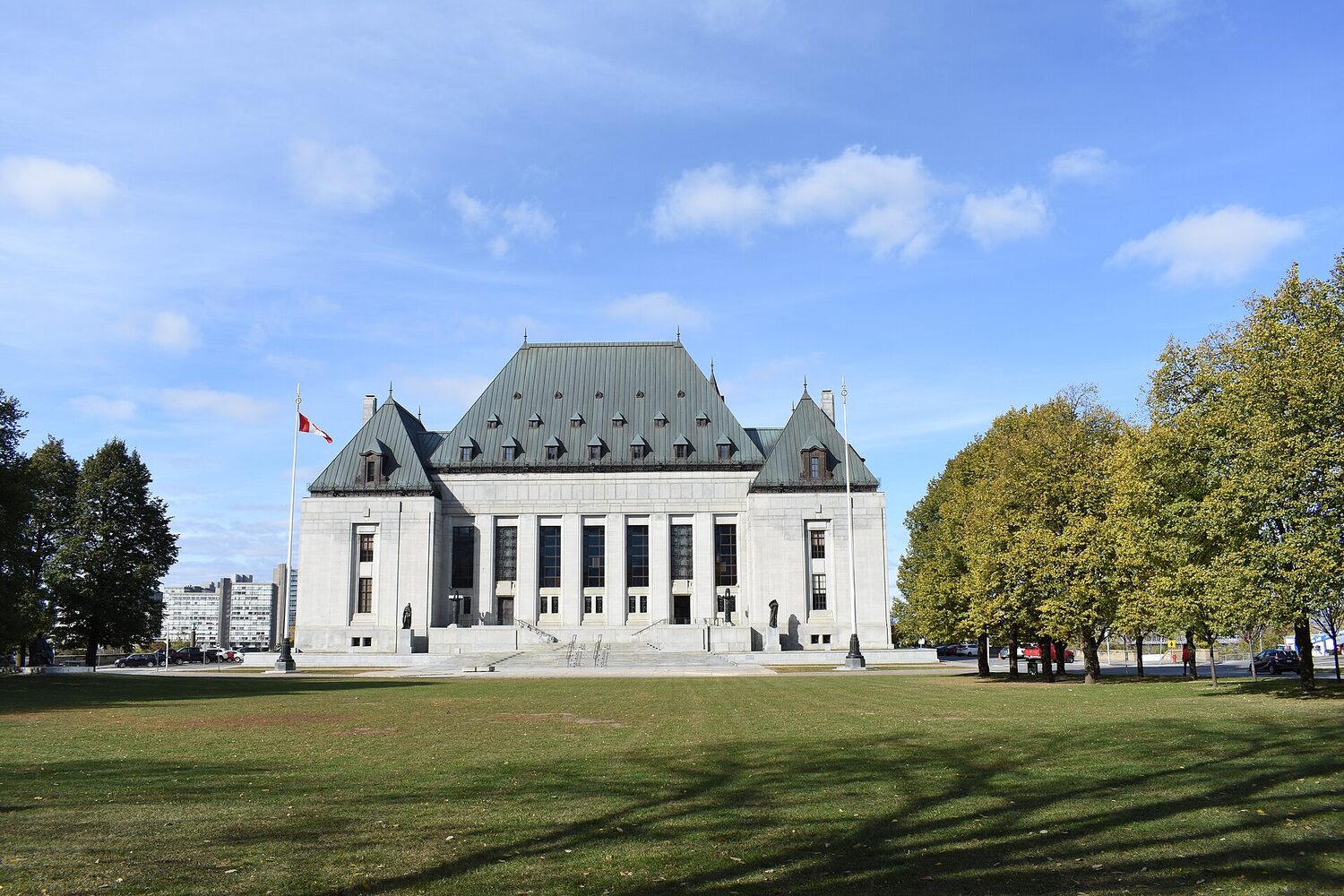
After decades of campaigning, Ontario extended full public funding to Catholic high schools, phased in from the 1985–86 school year — a landmark win for OECTA. Hamilton was at its heart: for generations the diocese here had quietly funded and staffed Catholic high schools out of its own pocket, and Hamilton's Bishop Ryan helped lead OECTA's campaign for “completion.” The Supreme Court upheld the law in 1987.
Learn more →
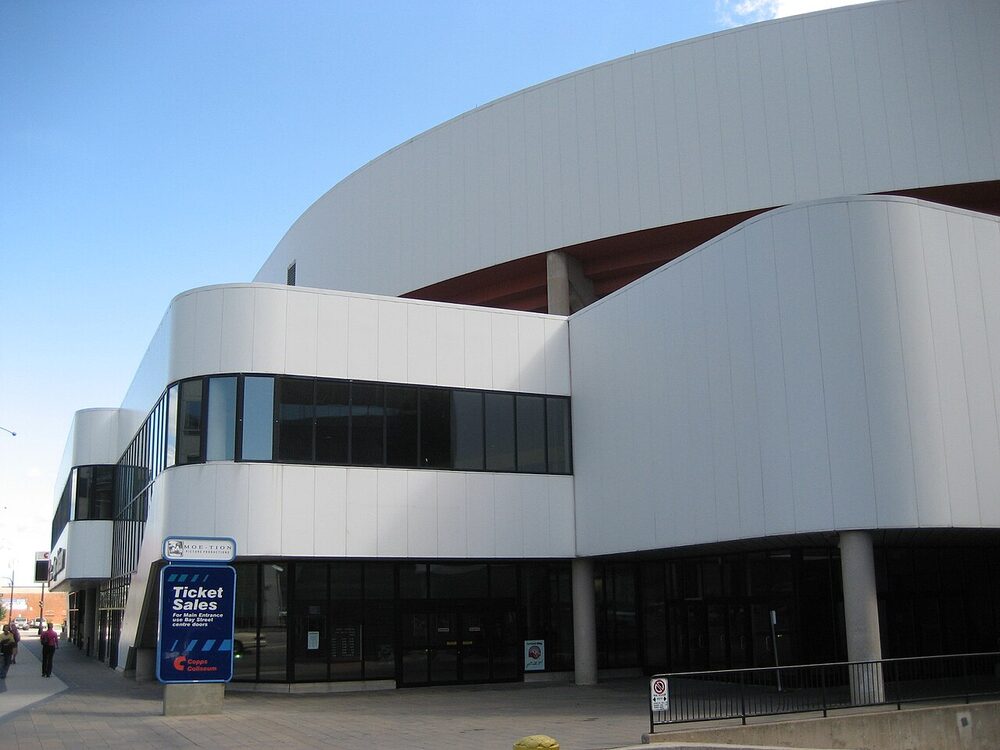
On April 1, 1989, more than 25,000 teachers — OECTA among them — packed Hamilton's Copps Coliseum during the governing Liberals' convention, demanding a real voice in their own pension fund. Provincial treasurer Robert Nixon came to hear them out. The fight helped win the landmark teacher–government partnership behind the Ontario Teachers' Pension Plan.
Learn more →
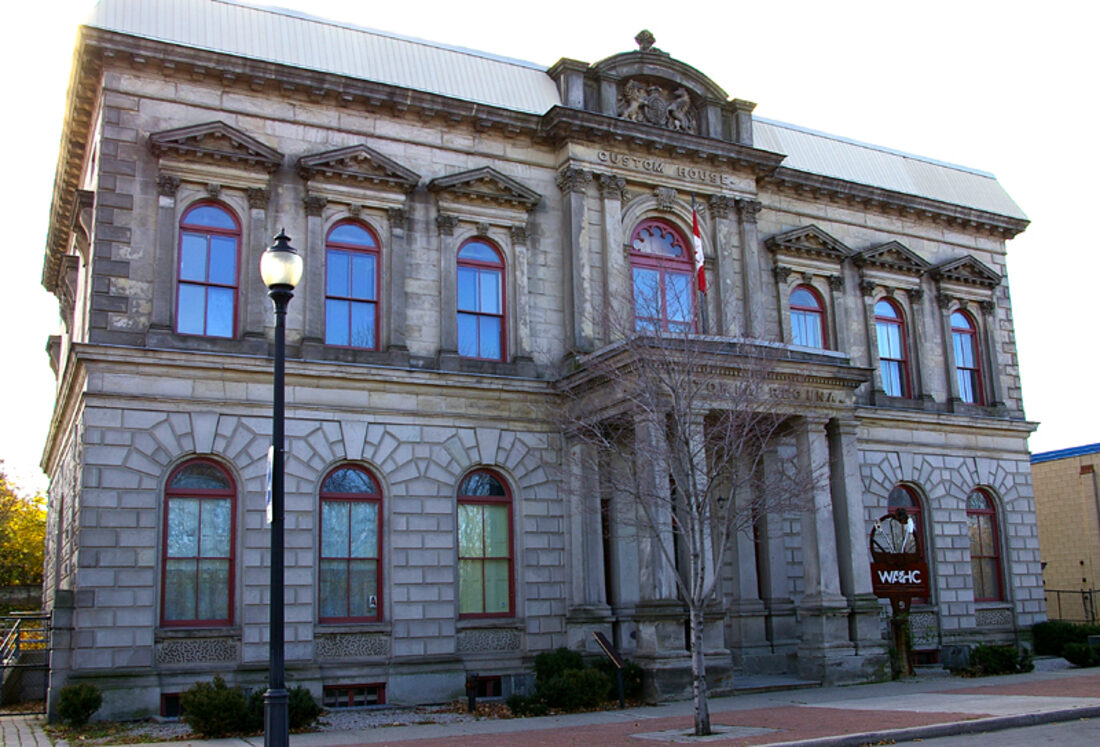
Canada's labour-history museum opened in the 1860 Custom House at 51 Stuart Street — a building the 1872 Nine-Hour march passed on its way through the city. It's a 15-minute walk from your hotel.
Learn more →
On February 23–24, 1996, a one-day general strike shut Hamilton down — around 25,000 walked off the job on the Friday, and an estimated 100,000 marched on the Saturday: what OECTA's own history records as the largest demonstration in Canadian history to that point. A mass stand against the Harris government's cuts, it saw teachers march alongside every other union — OECTA had joined the Ontario Federation of Labour the year before.
Learn more →
For two weeks that autumn, about 126,000 Ontario teachers — public and Catholic together, OECTA included — walked out against Bill 160, closing nearly every school in the province. The rallies filled arenas from Toronto's Maple Leaf Gardens to Hamilton's Copps Coliseum. It was called the largest teachers' walkout in North American history.
Learn more →The fight continued into our own time. On February 4, 2020, Ontario's Catholic teachers held a province-wide one-day strike — all 35 Hamilton–Wentworth Catholic schools closed — as OECTA members stood up for class sizes and fair bargaining.
Learn more →From the workers who built Canada's first labour council here in 1864, through the Nine-Hour Pioneers of 1872, to the teachers at Queen's Park in 1973 and 1997 — this city's story is your story. The rights you defend for your members were won by people who organized, and won.
Visit the Workers Arts & Heritage Centre →Hamilton's food scene punches well above its weight. The closest tables are an easy stroll from the lobby; a five-minute drive opens up much more. Reservations are wise for dinner, especially on weekends and arena nights next door.
Pub · seafood · patio on the water
If you want one quintessentially Hamilton spot, make it Fisher's — an easygoing harbourside pub at Pier 4 with a big covered patio over the water and fish & chips the locals swear by (lightly battered haddock; the Fisherman's Platter if you're hungry). Unfussy, friendly, pure Steeltown, and roomy enough for a work group.
Can't decide? Just walk to King William Street — downtown's pedestrian restaurant row, a couple of blocks from the lobby. Along one short, lively stretch you'll find Parma and Berkeley North (below), plus The French bistro, tacos at The Mule, burgers at Hambrgr, the Plank restobar, and a dozen more from ramen to schnitzel — wander it and pick what looks good.
Contemporary Canadian · seasonal · cocktails
A handsome wine-bar-and-restaurant doing a celebrated seven-course chef's-table tasting — charcoal-grilled, in-house butchery — quite literally around the corner. Strong private-event spaces make it a fine choice for a group dinner before the meeting.
Contemporary Canadian · small plates · lounge
A sleek, all-black kitchen and lounge for a refined sit-down dinner on Locke Street — try the tuna-tartare cannoli and a craft cocktail. Good for a hosted team meal (parties of eight or more add an automatic 20% gratuity).
Canadian · nose-to-tail · wine bar
A long-loved, buzzy James North room with an ever-changing nose-to-tail blackboard menu and a serious wine list. Creative, beautifully plated, and built for sharing over a relaxed group dinner.
Italian · pasta · fine dining
Polished, elegant downtown Italian on the pedestrian restaurant row — house-made ricotta gnocchi, short-rib risotto and seafood linguine, with attentive service. Business-casual and good for a professional dinner.
Small plates · West-Coast · seasonal
A stylish small-plates spot (a Michelin Bib Gourmand) doing West-Coast-inspired seasonal cooking — house-made gnocchi, teriyaki eggplant — meant to be shared. Reserve online for up to five; call for a bigger table.
Thai-Chinese · shareable · family-style
A vibrant Bangkok-meets-Chinatown street-food room — sticky pork ribs and large-format meats served family-style. Loud, fun, and ideal for a work group that likes to share.
Wood-fired pizza · farm-to-table · Locke St
The anchor of the Locke Street strip: a warm farm-to-table pizzeria with a street patio and stone-baked pizzas (the honey-and-chili Bee Sting is the one). Generous shared plates — and the most dietary-friendly kitchen on this list.
Gastropub · full bar · Locke St
An established Locke Street gastropub with elevated pub fare — steak frites, award-winning wings, British-style steak pies — and a full bar. Comfortable and easy for a group.
Fish & chips · diner · since 1946
A Hamilton institution since 1946 — classic fish & chips, burgers and thick milkshakes from the cheery orange-and-white diner. This is the harbour-front Hutch's, right by Bayfront Park and an easy stroll north from downtown (not the Beach location out east).
Doughnuts · coffee · James North
A beloved, no-nonsense Hamilton doughnut shop on James Street North — chocolate dip, walnut crunch, old-fashioned glazed and the cult “Ghost Buster” (an éclair-meets-Boston-cream). Often open around the clock.
Heritage Canadian · est. Hamilton, 1964 · the source
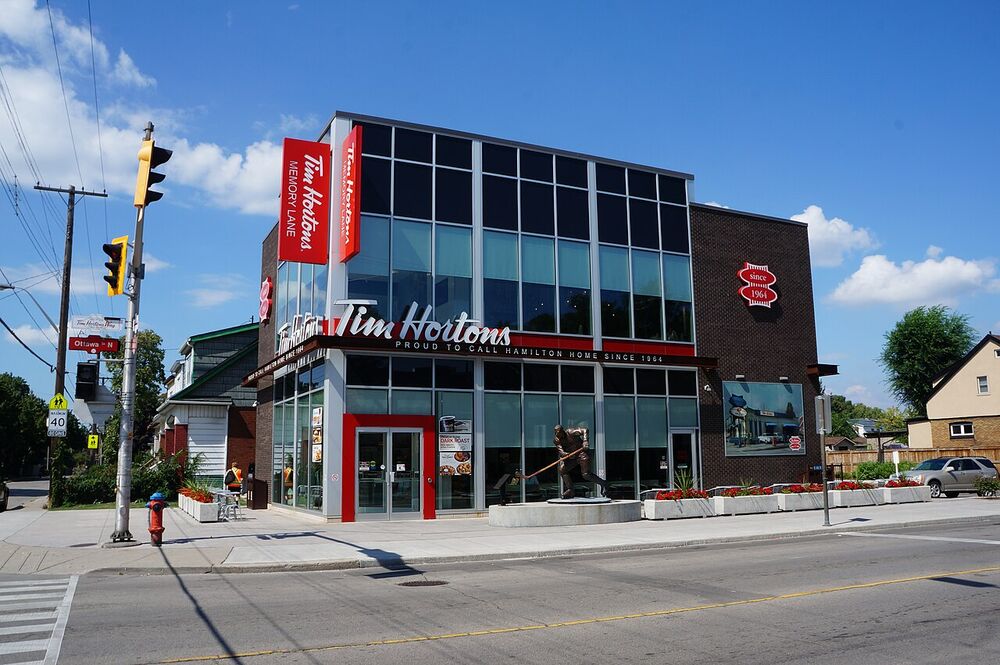
No serious survey of Hamilton's gastronomy dares omit the city's most consequential contribution to the national palate. Founded on these very streets in 1964 and since canonised from coast to coast to coast, this temple of the everyday has refined the coffee service to a liturgy: the storied double-double — a flawless equilibrium of two creams and two sugars, decanted into its iconic rolled-rim vessel — drinks with remarkable length and a finish of pure nostalgia. Nor should the pâtisserie programme be overlooked: the Boston cream, a study in custard and restraint; the apple fritter, baroque yet honest; the Timbit, that sublime amuse-bouche, presented in flights of ten or twenty. The cellar is a chalkboard, the maître d’ wears a visor, and the chef’s table is the drive-thru. One does not so much dine here as belong.
Craft brewery · beer hall · beer garden
Hamilton's flagship craft brewery in a converted industrial space — a massive, art-covered beer hall plus an outdoor beer garden, with hot paninis and excellent non-alcoholic options. Roomy for big groups.
Craft brewery · taproom · west end
A bright west-end taproom away from the crowds — small-batch house beers (Italian pilsner, blonde ale, session IPA), a garage-door patio, live-music nights, games and dog-friendly tables. A casual hang.
Indoor market · food hall · bakeries
A historic year-round indoor market in the Jackson Square block — 50-plus vendors with produce, bakeries, meat pies and global prepared-food stalls under one roof. An easy, grab-and-mingle group lunch a short walk from the hotel.
There's a Starbucks in the Sheraton lobby for early mornings, and independent cafes cluster along James Street North and Locke Street — easy to pair with a wander between sessions.
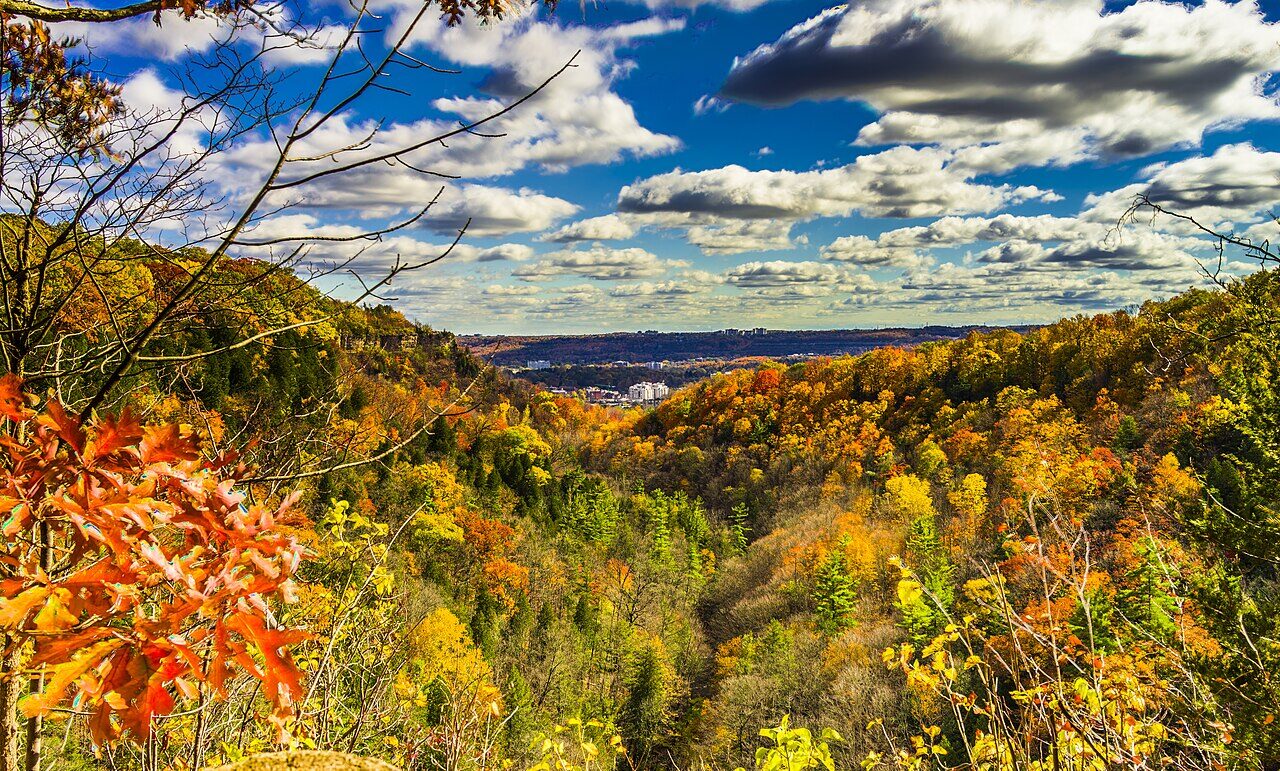
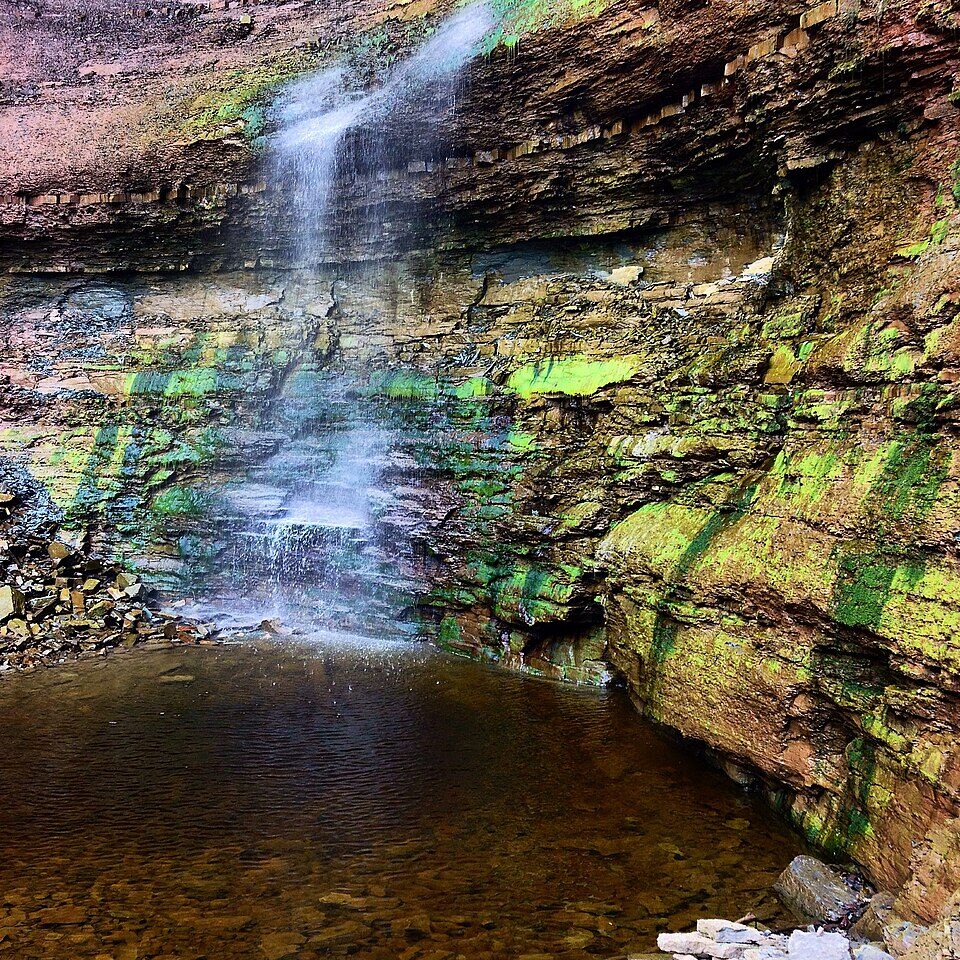
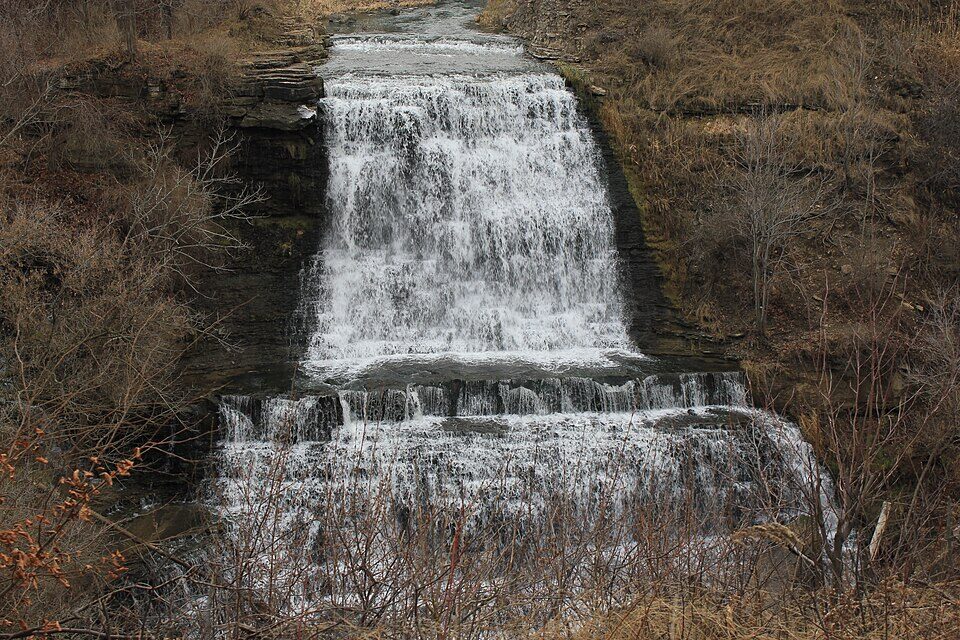
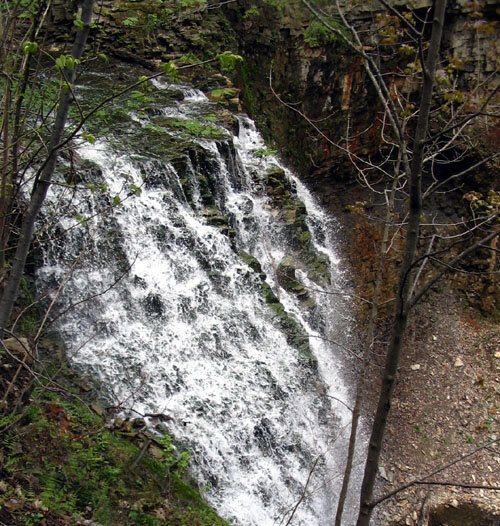
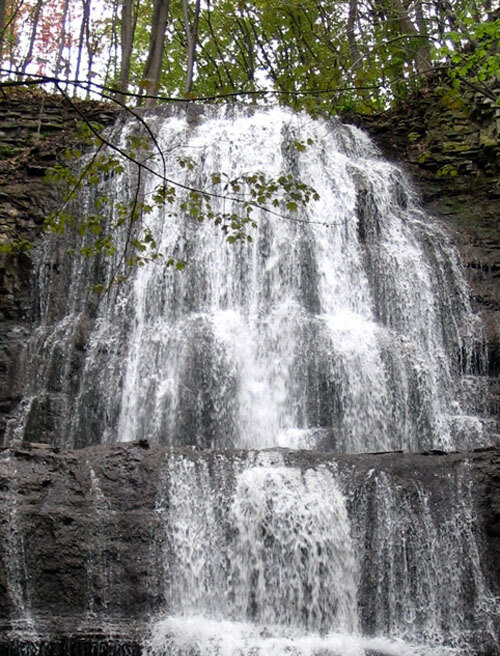
Hamilton calls itself the Waterfall Capital of the World — well over a hundred cascades tumble off the escarpment — and it's home to Canada's largest botanical garden. If you brought a car and have a free morning, this is where to spend it.

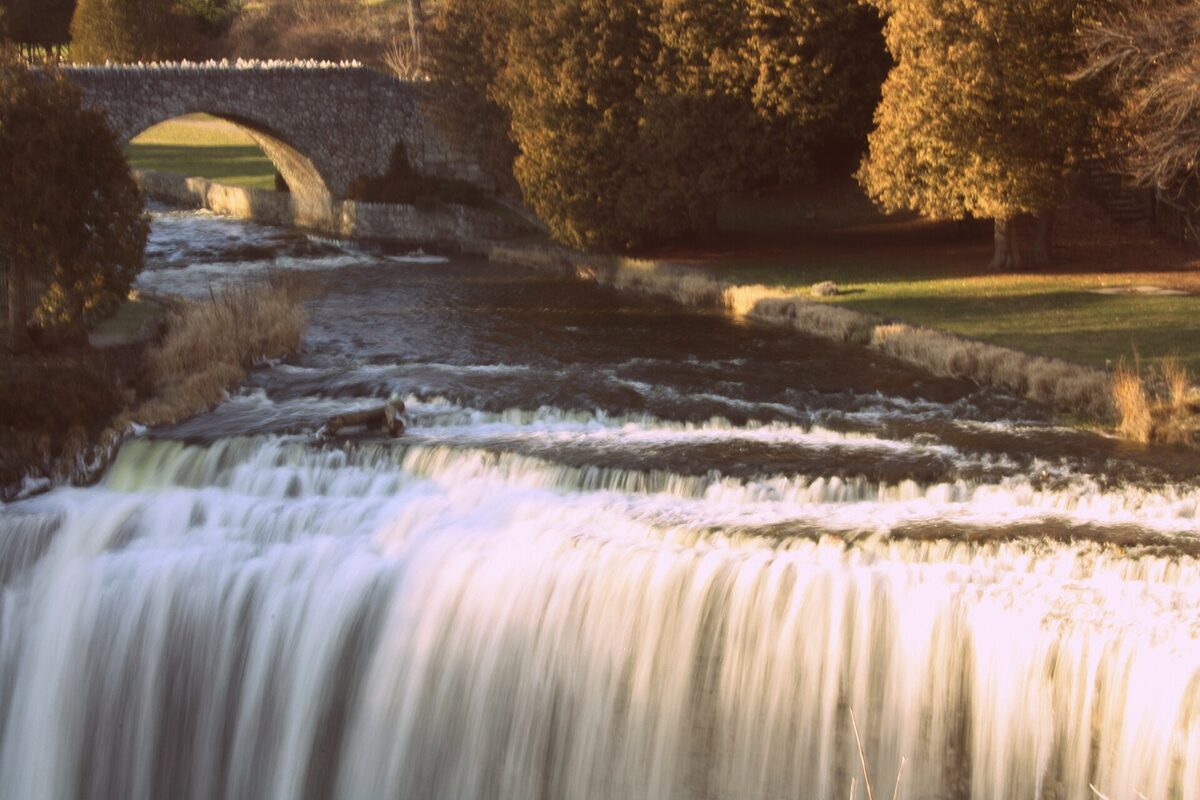
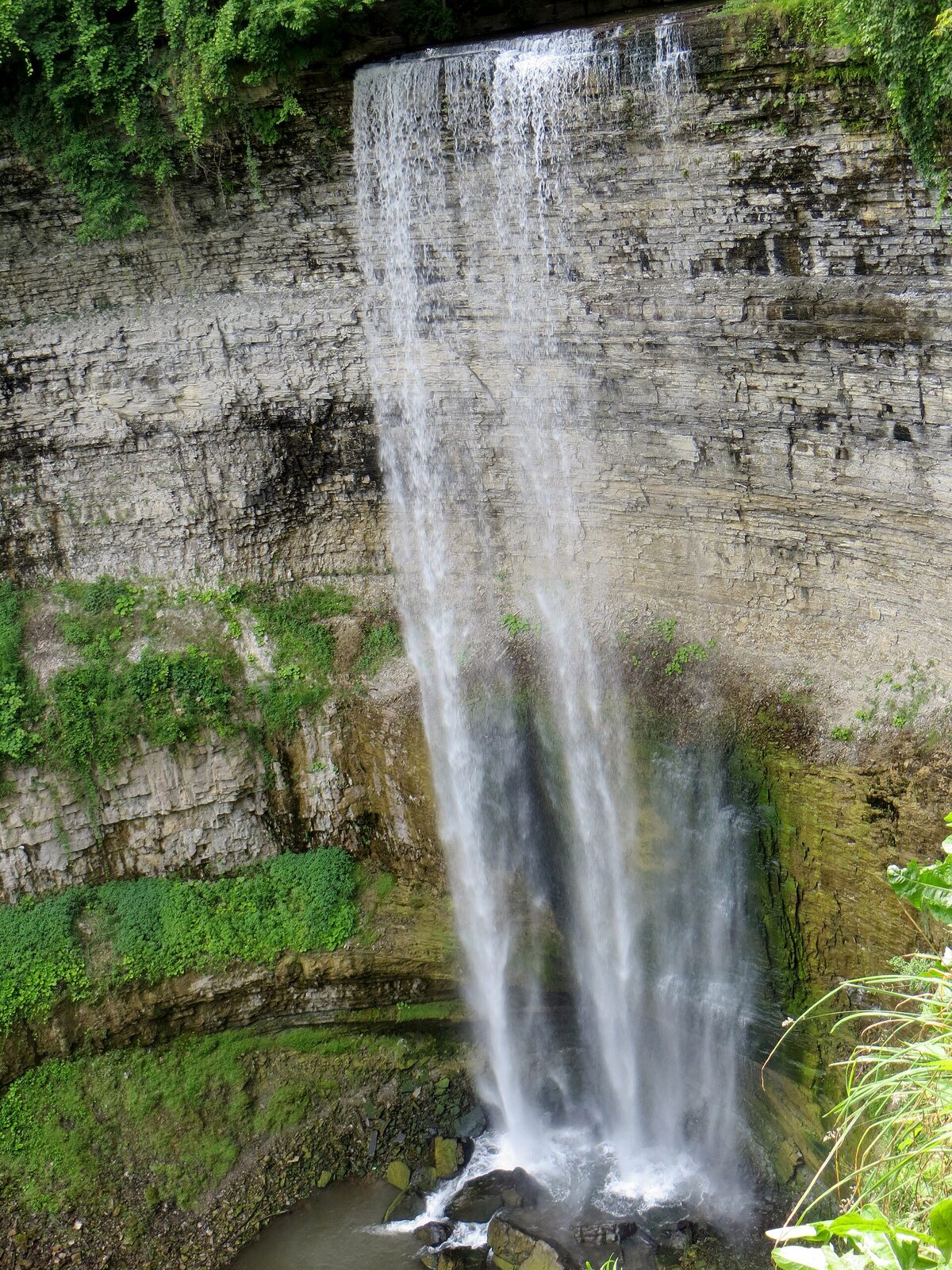
The headline act. Tews Falls plunges 41 m — only a few metres shy of Niagara — while Webster's is a classic curtain waterfall crossed by a restored cobblestone bridge. The Dundas Peak lookout takes in the whole valley.

A wide, classically tiered cascade tumbling down the east Mountain, with viewing platforms right by the road — one of the city's most-photographed falls, and free.

A slender 37-m ribbon falls dropping through a striped amphitheatre of rust-and-green layered rock, beside a giant cross and a sweeping lookout over the city. A free roadside stop in Stoney Creek.

A graceful cascade slipping over mossy rock at the end of a short, shady trail in Ancaster — an easy, pretty walk-in just off the highway.

A lovely tiered curtain falls — locals call it Angel Falls — tucked in the green of the Dundas Valley, a short walk from the road. Please keep to the path; it borders private land.
As of 2026, the Hamilton Conservation Authority no longer requires reservations for Webster's Falls, Tews Falls and Dundas Peak — visits are first-come, first-served. There is still gated, paid parking (about $11 per vehicle) at the two lots, 590 Harvest Rd and 28 Fallsview Rd. Always confirm current details at conservationhamilton.ca. Enjoy the views from the platforms and stay behind the fencing.
Those are the headliners, but the escarpment hides scores of others — Borer's Falls above Dundas, Felker's Falls and its boardwalk on the east Mountain, Canterbury Falls in the Dundas Valley, Great Falls in Waterdown. For the full map, hours and parking see waterfalls.hamilton.ca, Tourism Hamilton's waterfall guide, or the full list.

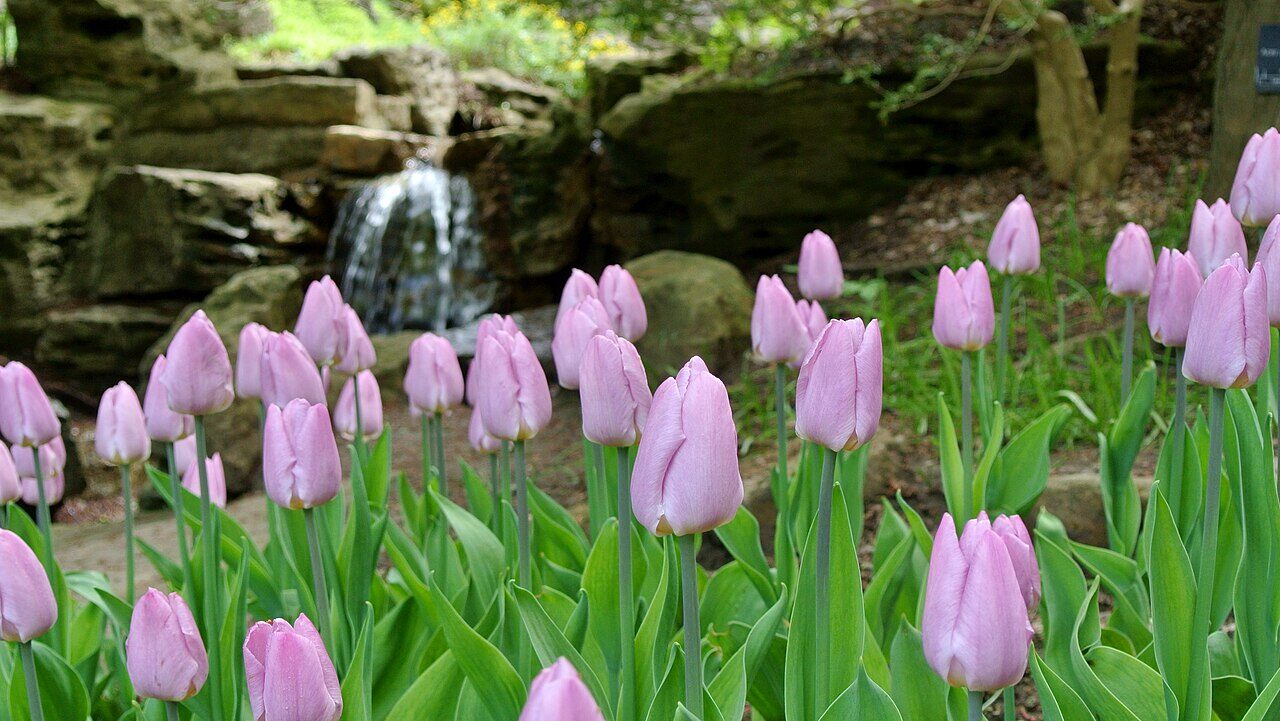
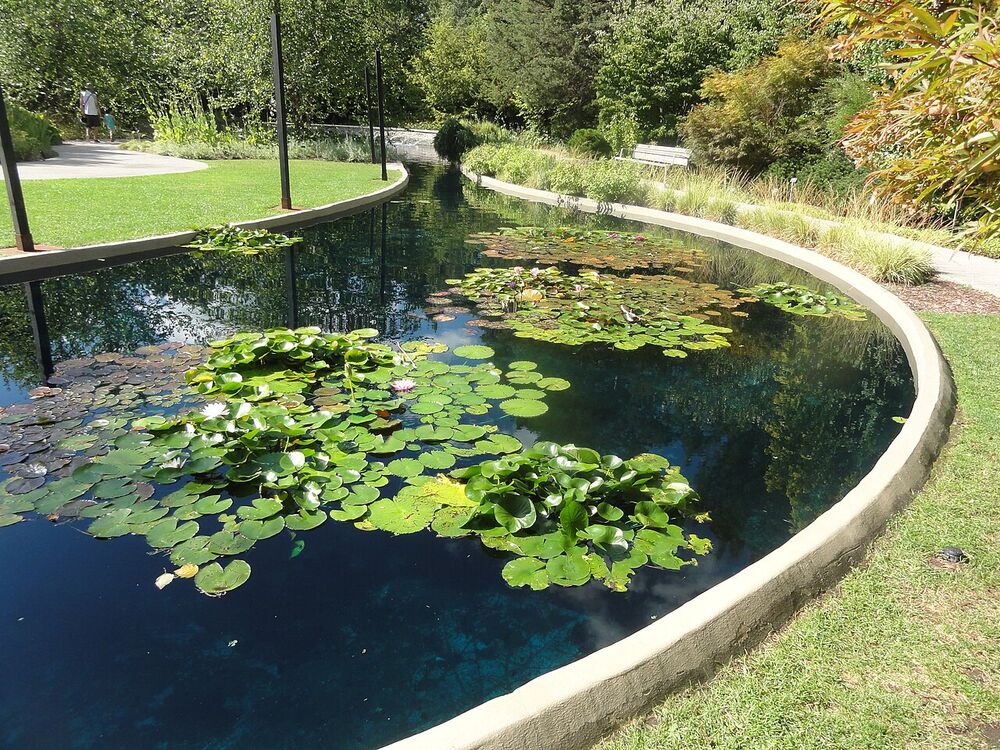
Canada's largest botanical garden, across several sites — formal display gardens in full June bloom, lilacs and roses, and roughly 27 km of trails through the Cootes Paradise sanctuary. The Arboretum entrance is on the Hamilton side.

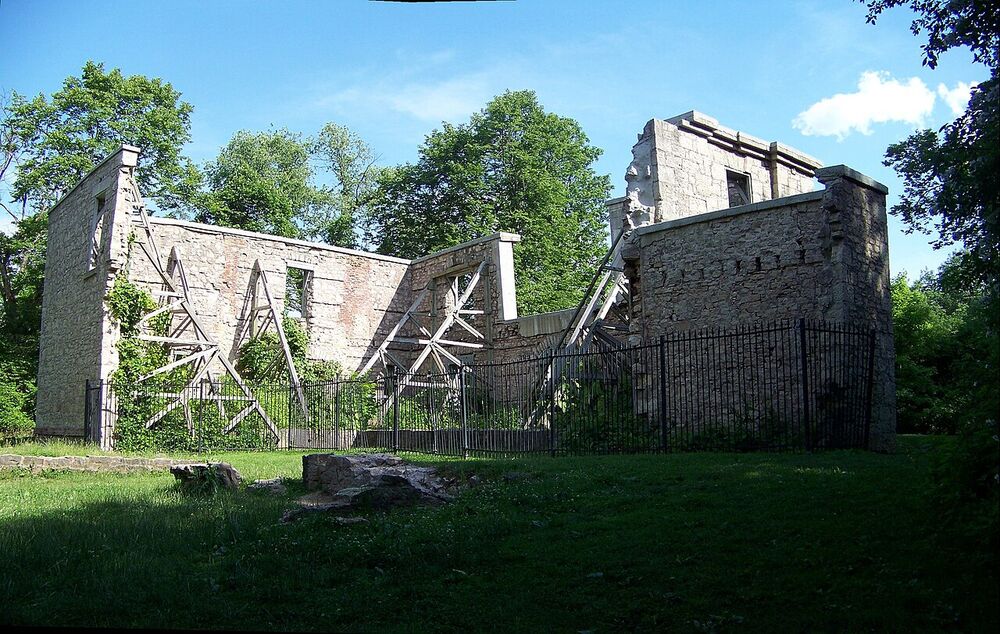
A glorious forested valley with 40+ km of trails, the storybook Hermitage ruins, and a trail centre built like an old rail station. Sherman and Canterbury falls hide just off the main loop.

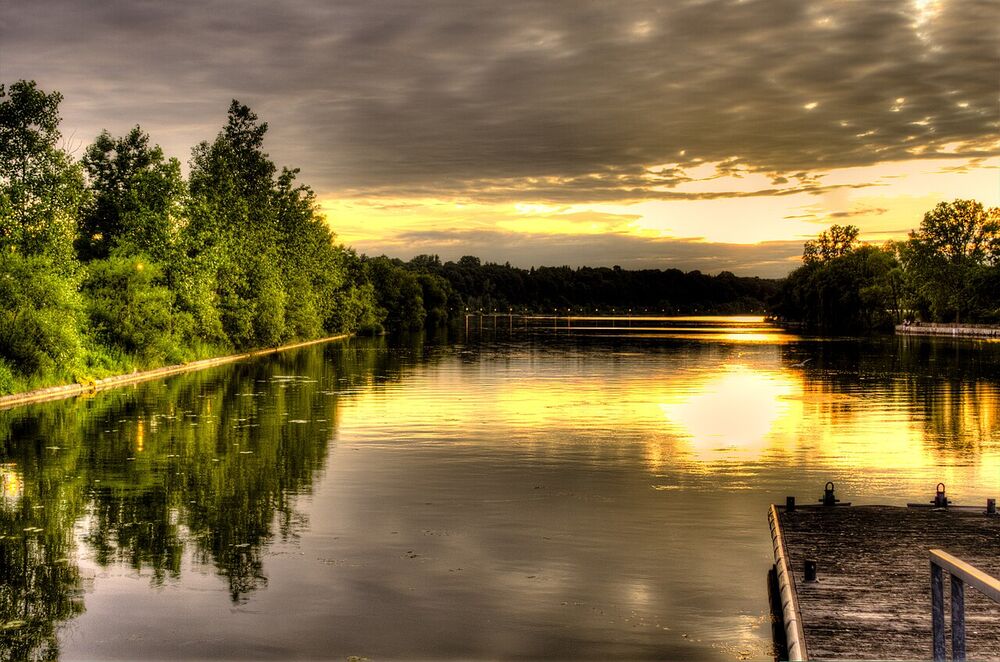
Lakeside trails, long June sunsets and harbour views, connecting to the reborn Pier 8 waterfront with its patios and promenade. An easy evening walk after a day of meetings.
Beyond the labour story above, Hamilton wears its history openly — in grand villas and a Gilded-Age castle, a 19th-century steam waterworks, a War of 1812 battlefield, and the farmhouse where the Women's Institute was born. Most civic museums run Tuesday–Sunday and often close at 4 PM (closed Mondays); confirm before heading out.

Canada's labour-history museum, in the beautifully restored 1860 Custom House — the building the 1872 Nine-Hour march passed on its way through the city. The one not to miss for this group.

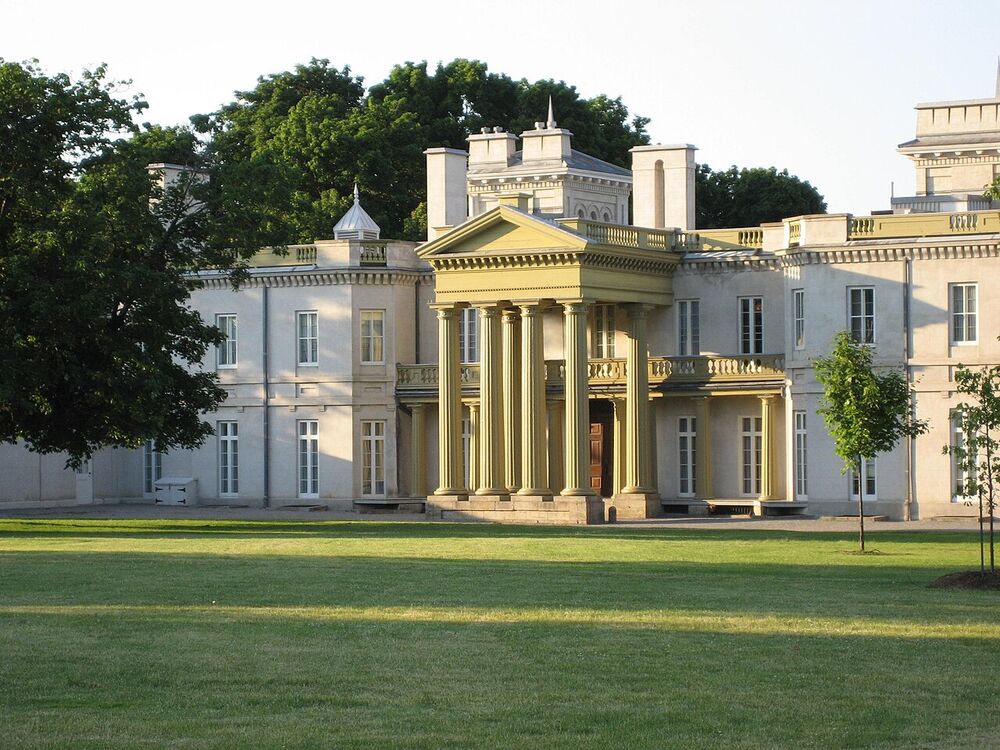
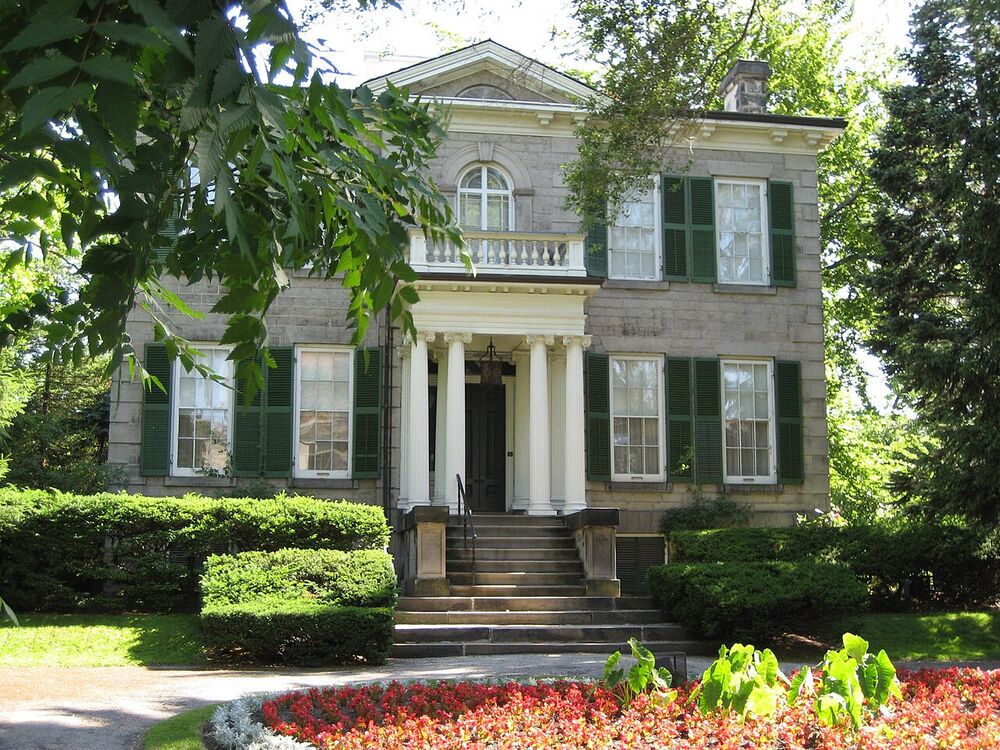
A 40-room 1830s Italianate villa above the harbour, once home to Sir Allan MacNab. Costumed-interpreter tours bring the era to life, from the grand rooms to the working kitchen and garden.

A perfectly preserved family home and walled garden tucked behind City Hall — a quiet downtown oasis, with storytelling tours locals rave about. An easy walk from the hotel.

An 1796 homestead on the 1813 Battle of Stoney Creek site, crowned by a 100-ft monument; and a National Historic Site preserving Hamilton's 1859 waterworks with two colossal steam engines.

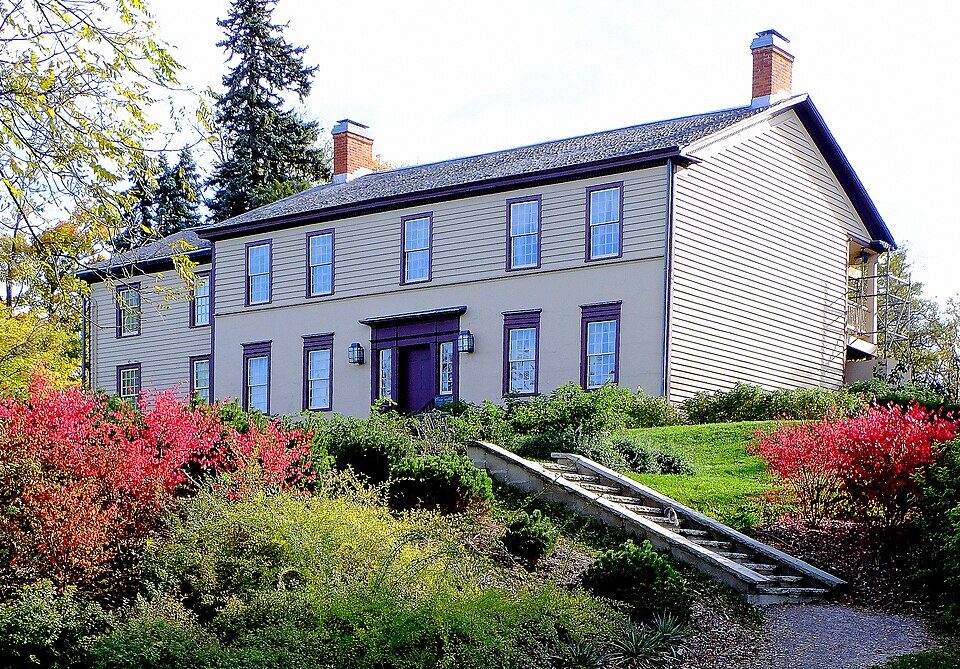
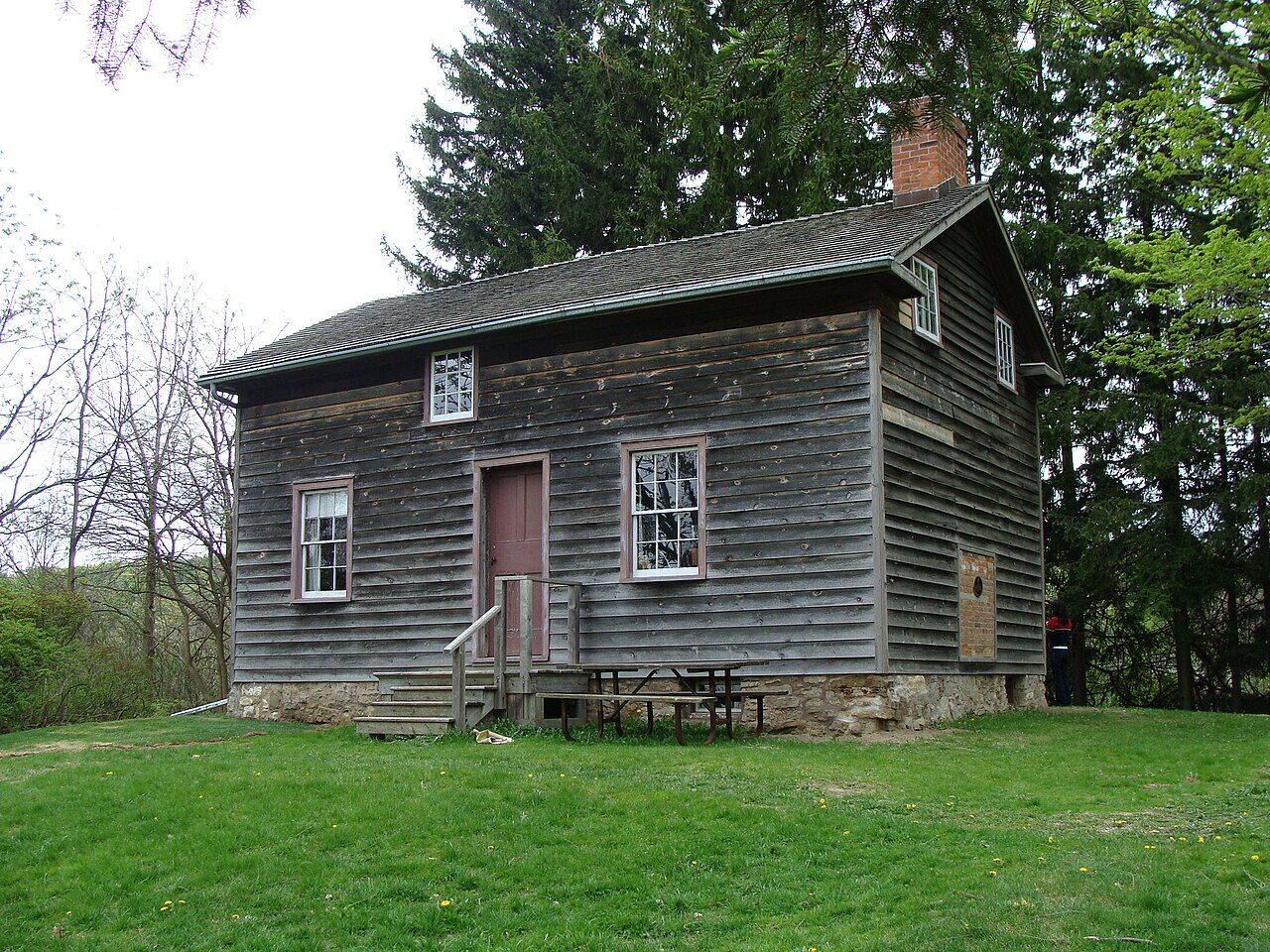
One of the most significant sites in the region's Black history: a modest 1827 board farmhouse bought in 1834 by Enerals Griffin, a Black immigrant from Virginia, and kept in his family for 154 years. A National Historic Site of Canada in the Dundas Valley, it speaks to early Black settlement in Upper Canada in the Underground‑Railroad era. A roughly $1M restoration (city, provincial and federal) is refreshing the house through 2026.

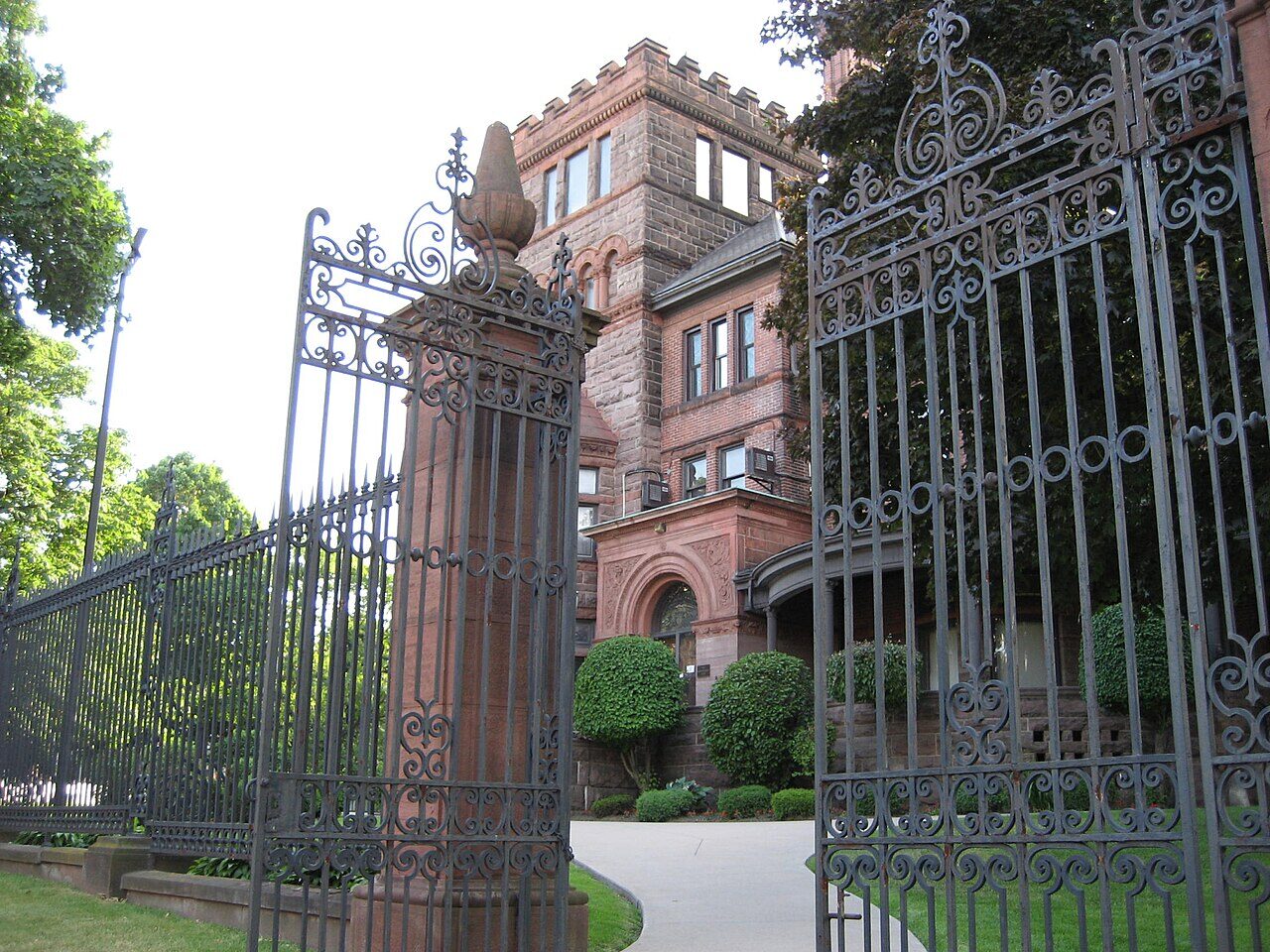
Hamilton's Gilded-Age “castle” — an 1896 Romanesque mansion built for tobacco magnate (and mayor) George Tuckett, later joined to a grand Masonic cathedral. The turreted exterior is a short walk from the hotel; group interior tours can be pre-booked.

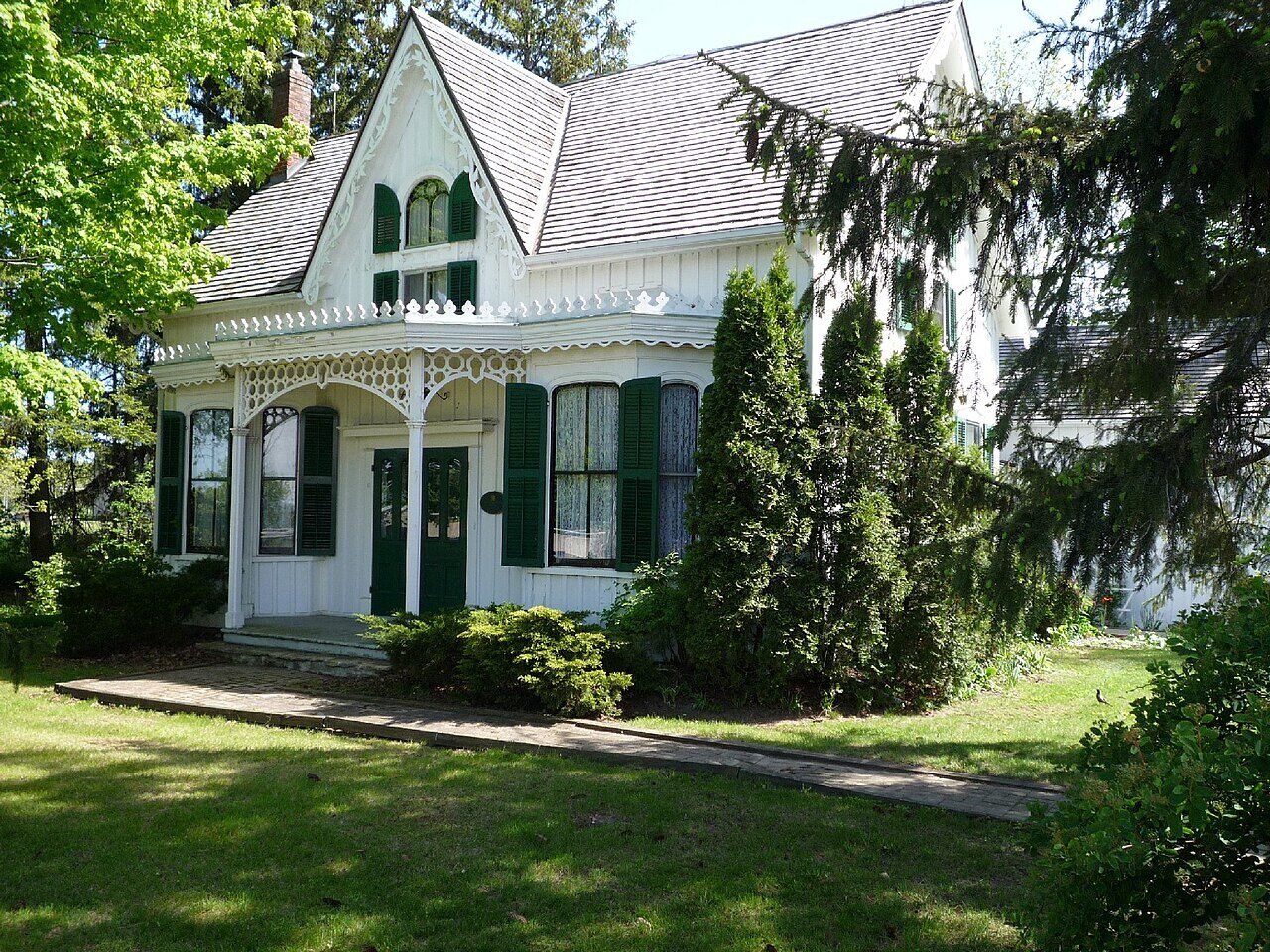
The farmhouse where, in 1897, the world's first Women's Institute constitution was written at the family dining table — the birthplace of a global women's-education movement. A restored home with gardens and escarpment views.

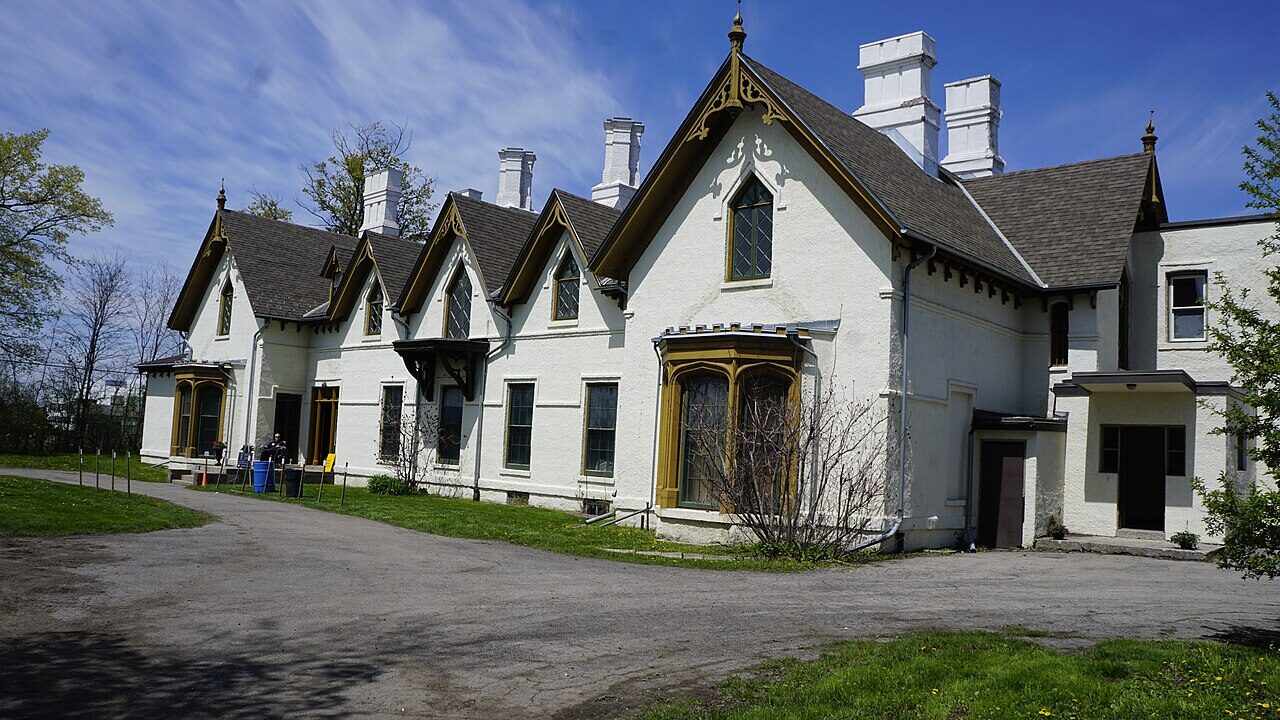
The last surviving Victorian country estate on the Mountain — Isaac Buchanan's c.1854 Gothic Revival manor in walled, landscaped grounds. Stroll the grounds year-round; guided interior tours run from mid-summer.
June is National Indigenous History Month, with National Indigenous Peoples Day on June 21. The land Hamilton sits on holds deep and living Indigenous history — and a short drive south, the Six Nations of the Grand River, the largest First Nations community in Canada, is home to some of the country's richest Haudenosaunee culture. A few welcoming ways to learn and to honour it.
The riverside home where the celebrated Mohawk poet and performer E. Pauline Johnson (Tekahionwake) was born in 1861. The graceful 1850s house is known for its two front doors — one facing the Grand River to welcome those arriving by canoe, one facing the road for visitors by carriage — built as a symbol of two cultures meeting as equals. Tours, grounds and the riverside Chiefswood Park.
The largest First Nations community in Canada, and a welcoming place to experience living Haudenosaunee culture. Six Nations Tourism runs a guided Grand River paddle that shares history out on the water; you can take in lacrosse — the Creator's Game, which began with these nations — or walk the Carolinian-forest Six Nations Trail.
A Haudenosaunee-led centre of art, language and education since 1972, in nearby Brantford. Its museum and galleries hold tens of thousands of works, and its exhibitions, performances and language programs celebrate and carry forward the living culture of the Grand River nations.
For the educators in the room, a deep bench — one of the country's great public galleries directly across the street, a Lancaster bomber on a hangar floor, a WWII warship on the harbour, a soaring cathedral up the street, and the church at the heart of Hamilton's Underground Railroad story.

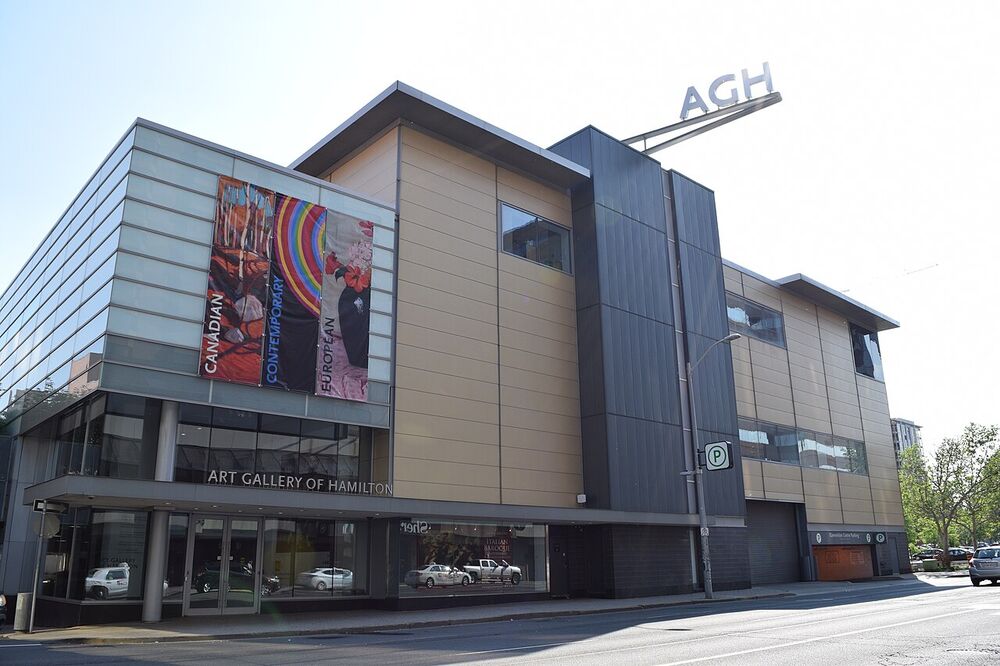
One of Canada's oldest and largest public galleries, with a strong historical and contemporary Canadian collection — a two-minute walk from the Sheraton. Thursday evenings run late.

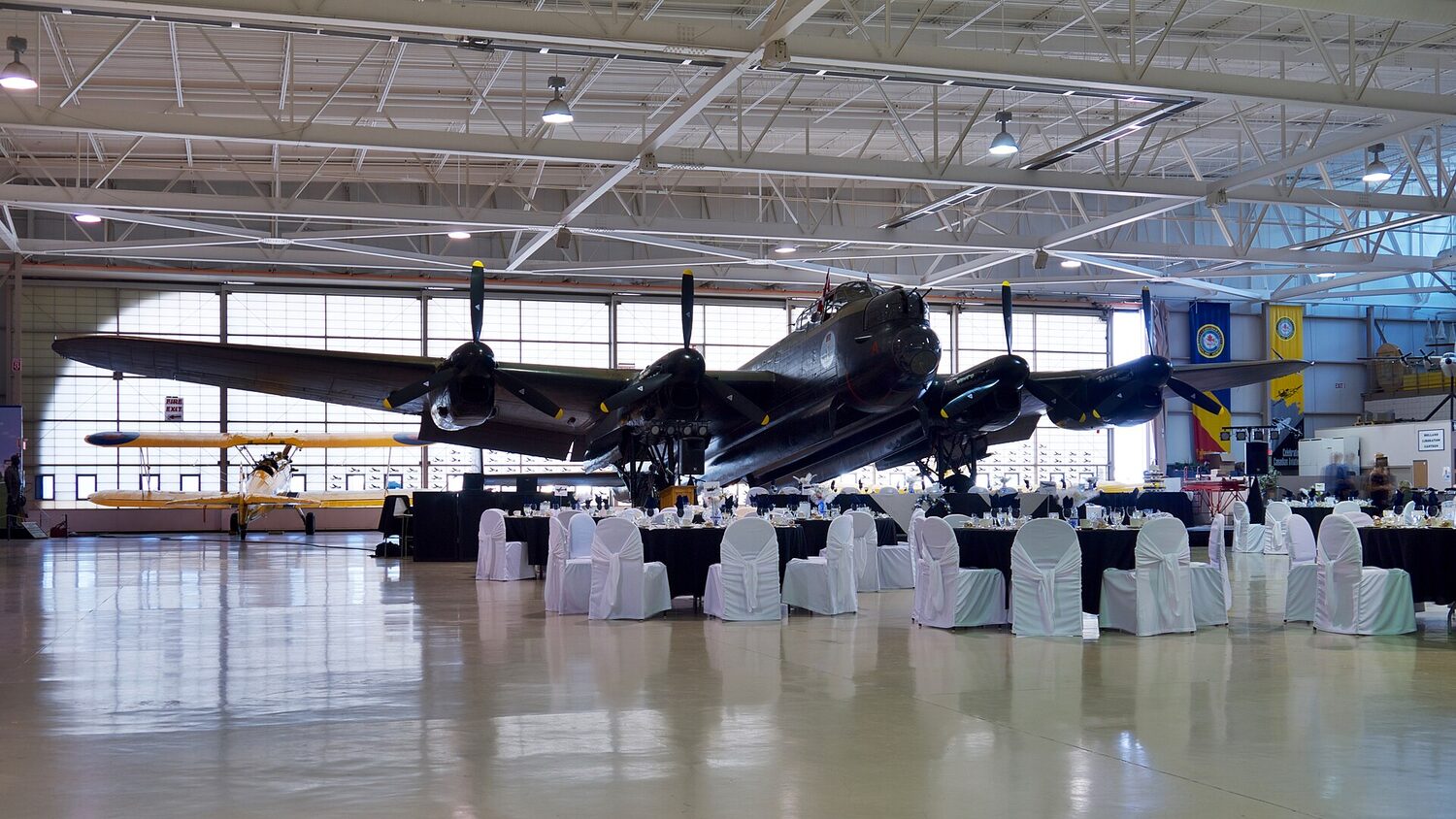
A working collection of WWII and Cold-War aircraft — including one of only two airworthy Avro Lancaster bombers in the world. Restoration happens right on the hangar floor.

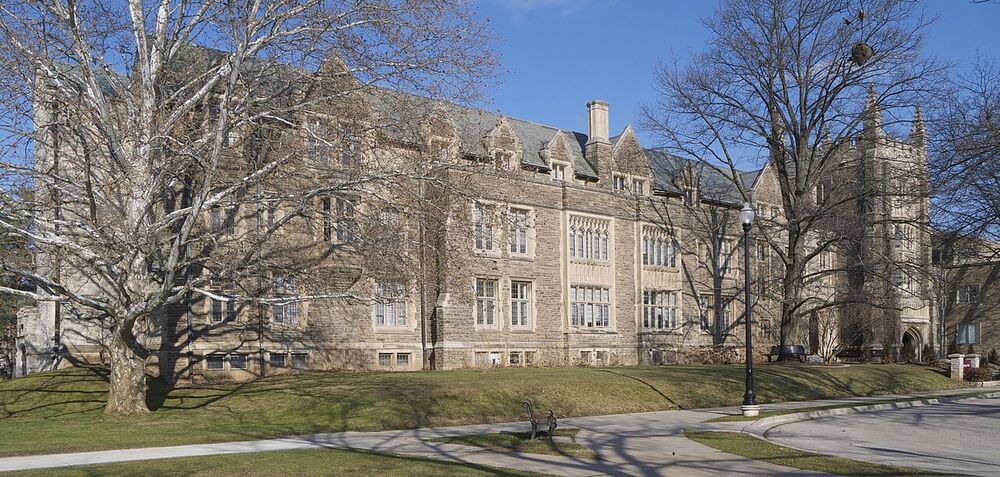
A leafy, walkable campus — a medicine and engineering powerhouse — bordered by charming Westdale Village and the restored 1930s Westdale Theatre. The McMaster Museum of Art sits on campus.

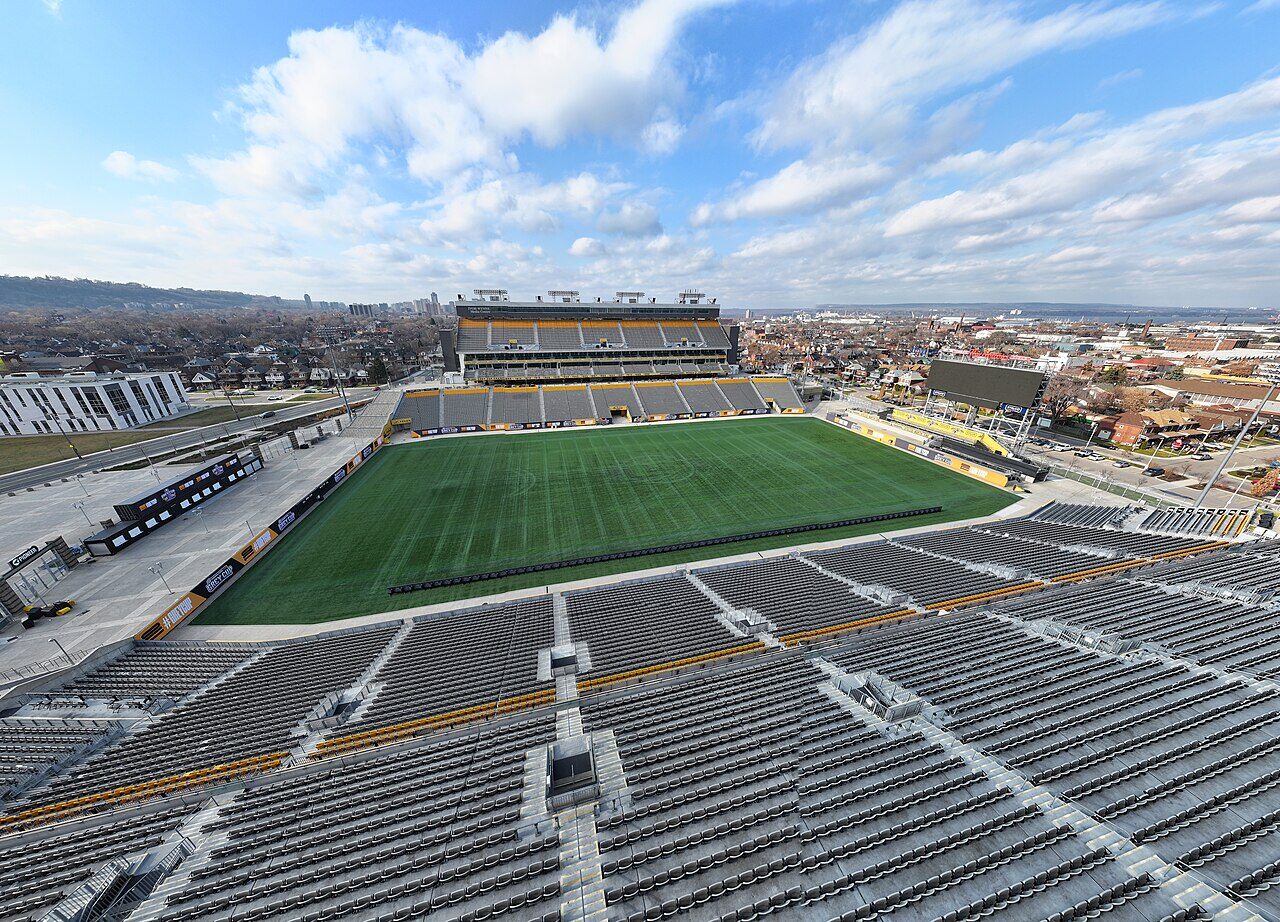
Canada's football shrine, honouring the legends of the CFL. After decades in a downtown museum, it moved in 2018 to the club level of Tim Hortons Field, the Tiger-Cats' stadium. Heads up: it's no longer a daily walk-in museum — public access is now limited (largely Ticats game days), so check cfhof.ca for current hours before making the trip.

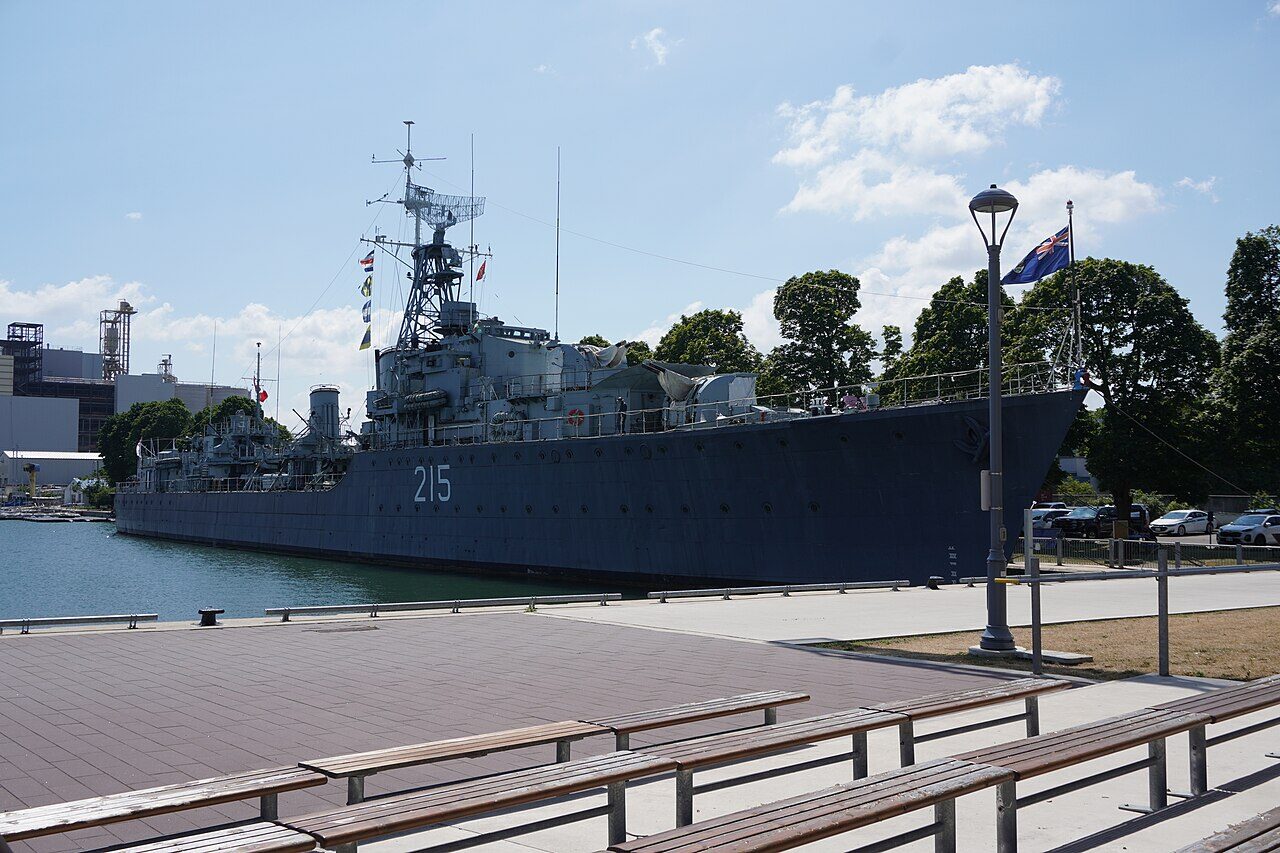
Canada's most decorated warship — the last Tribal-class destroyer left in the world, a veteran of the Second World War and Korea, now moored at Pier 9. Walk her decks, mess halls and gun turrets in about an hour; a Parks Canada National Historic Site.

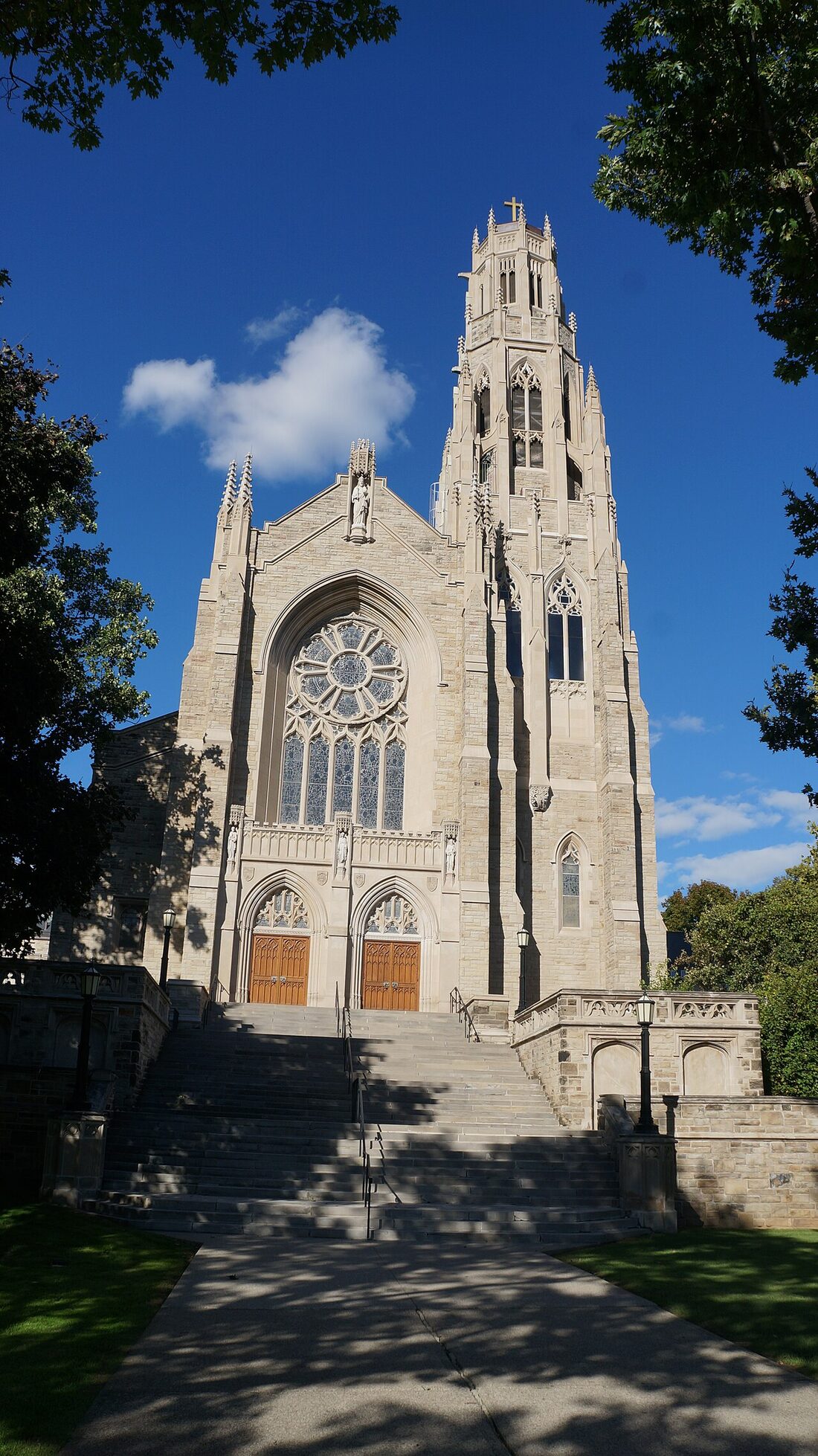
Hamilton's Roman Catholic cathedral — a soaring 1933 English Gothic basilica in pale limestone, with a fan-vaulted ceiling and dozens of Munich stained-glass windows. Free to step inside, a walk up King Street West. A fitting one for this group.

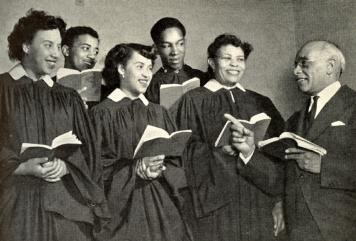
Hamilton's oldest Black congregation, rooted in the Underground Railroad — its first pastor was Josiah Henson, the man behind Uncle Tom's Cabin, and its members have included Lincoln Alexander and Olympian Ray Lewis. The choir (pictured, 1950) still sings spirituals carried north to freedom.
One of Canada's longest-running artist-run centres (founded 1975), a free non-commercial gallery in the heart of the James North arts district — an easy look-in, especially on Art Crawl Friday.

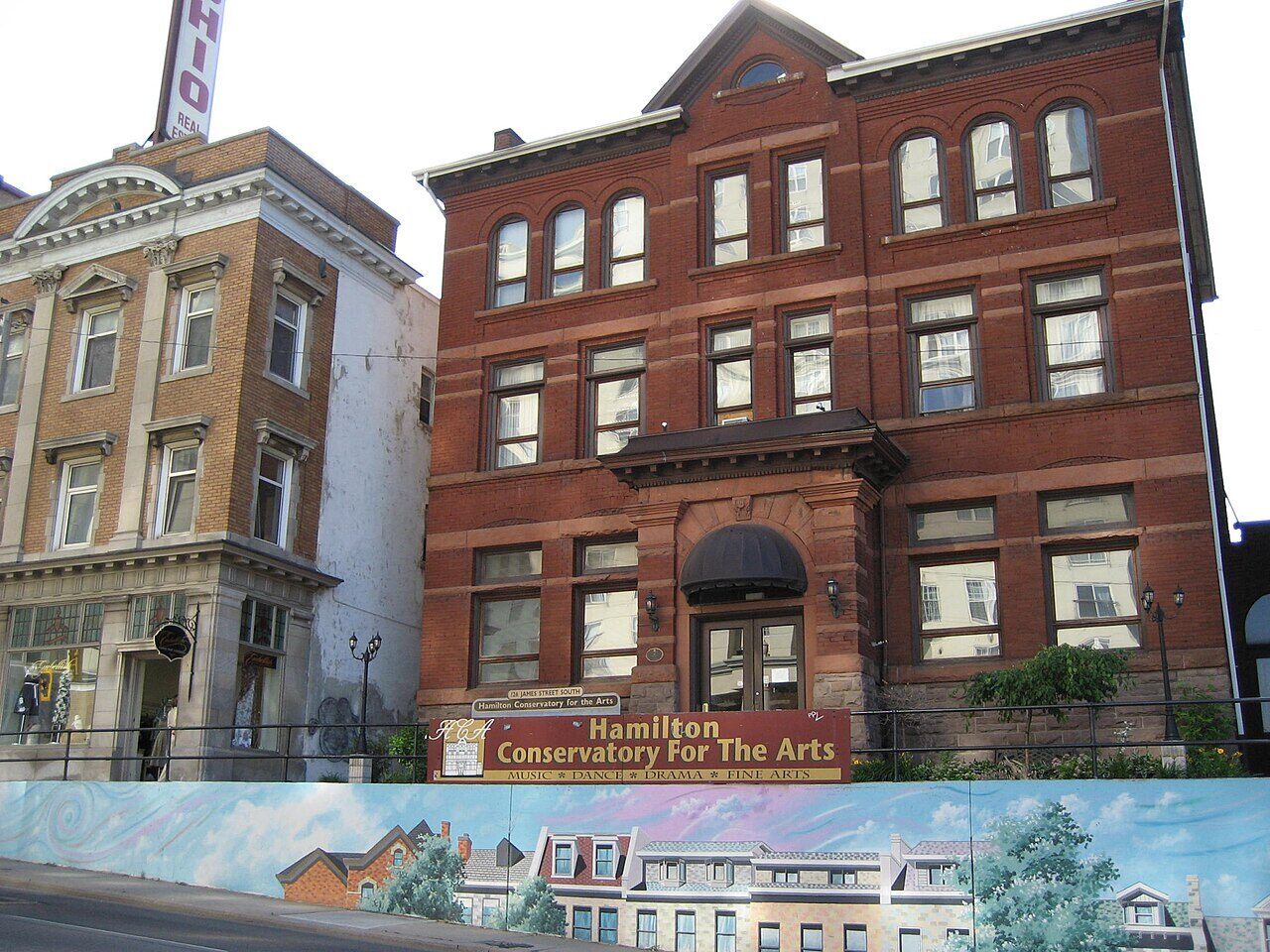
A community arts school in a grand, restored 1890s landmark on James Street South, with a free public gallery and a busy calendar of music, dance and exhibitions.

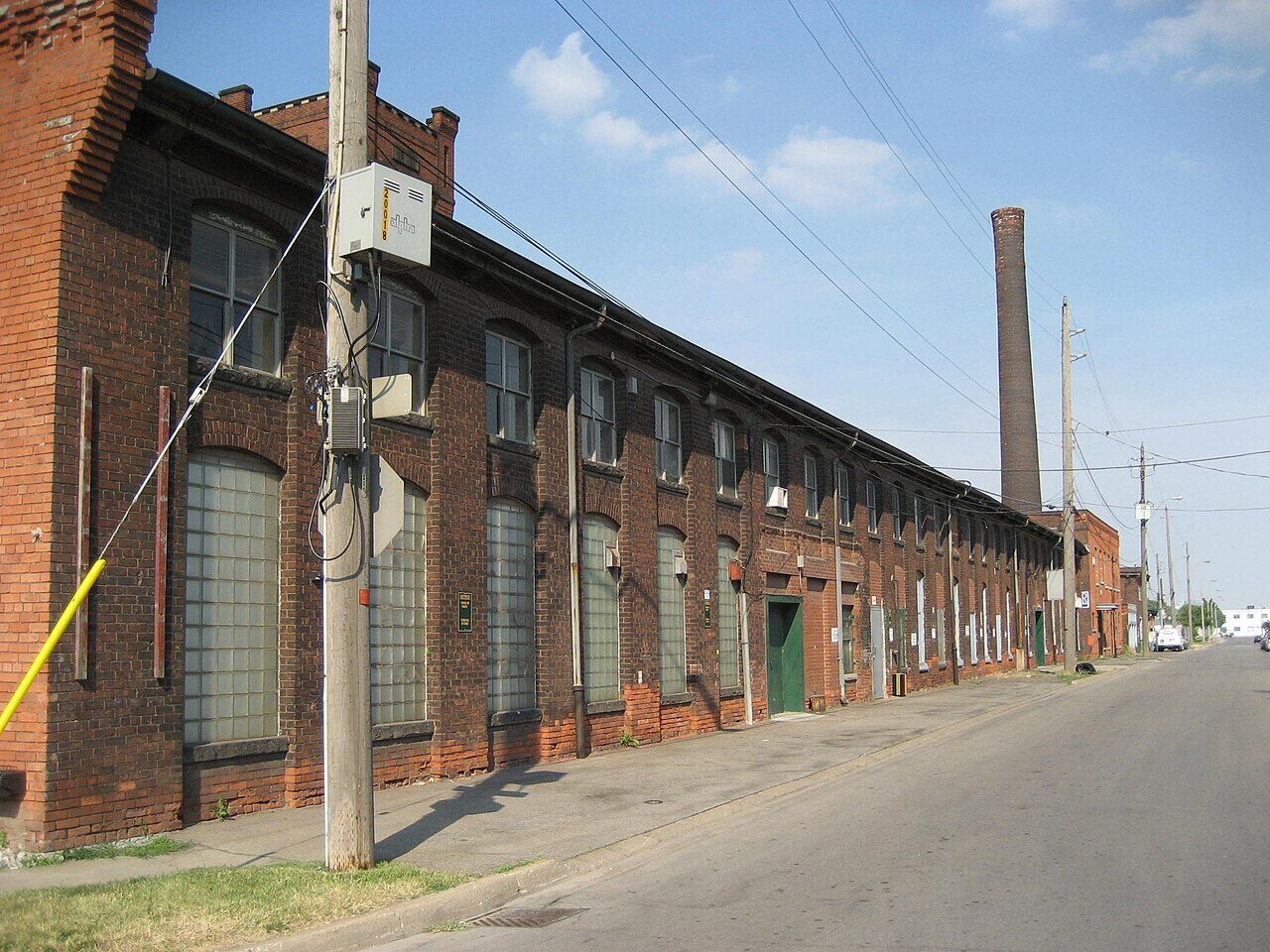
Hamilton's industrial-heritage-to-creative-economy story in one building: the 1900 Imperial Cotton mill, its dramatic brick halls now full of artist studios, galleries and event spaces.

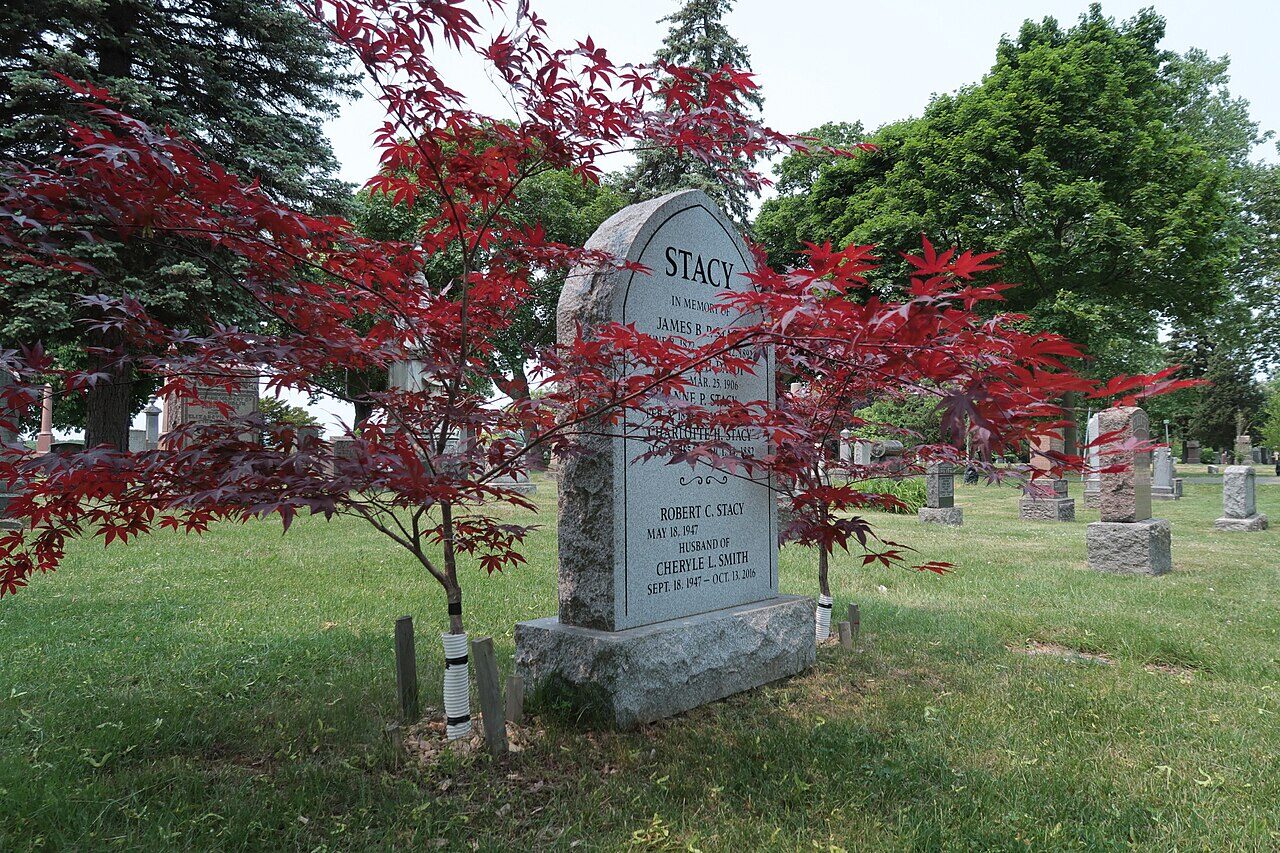
Ontario's oldest municipal cemetery (1847), across from Dundurn — a quietly beautiful place to walk, with free seasonal “Cemetery Chronicle” tours past the graves of the people who built the city. An easy pairing with Dundurn Castle.
A free local-history museum telling the story of the “Valley Town” of Dundas, with restored period buildings on site — an easy add-on to a wander down Dundas's King Street.
Ancaster's local-history museum in a 1920s estate home, set in landscaped gardens with a heritage and sculpture park — a peaceful stop if you're out exploring the western communities.
Hamilton has a long, proud 2SLGBTQ+ history — in its bars and bookstores, its activists and artists, and a Pride that's been celebrated here since 1991. A few ways to connect with it while you're in town.
A community heritage project — with Hamilton Civic Museums — that maps 41 sites of the city's 2SLGBTQ+ history: the bars and bookstores, theatres and gathering places where 2SLGBTQ+ Hamilton was built, told through an interactive map and recorded oral histories. The richest way to see the city through this lens.
Hamilton has marked Pride since 1991. The 2026 festival — themed “We BELONG” — runs August 21–23 at Pier 4 Park on the waterfront, just after your visit; but June is Pride Month, and the community's mark is on the lower city year-round.
A grand Victorian park in the east end — a formal rose garden, a tropical greenhouse and a stately 1927 fountain — long at the heart of Hamilton Pride. A lovely walk in its own right if you're exploring beyond downtown.
At the Central Library, the city's 2SLGBTQ+ Community Archive preserves more than 50 years of Hamilton's LGBT2SQ+ history — built on the lifelong collection of community archivist Michael Johnstone. A quiet, remarkable resource for the history-minded; research visits are by appointment.
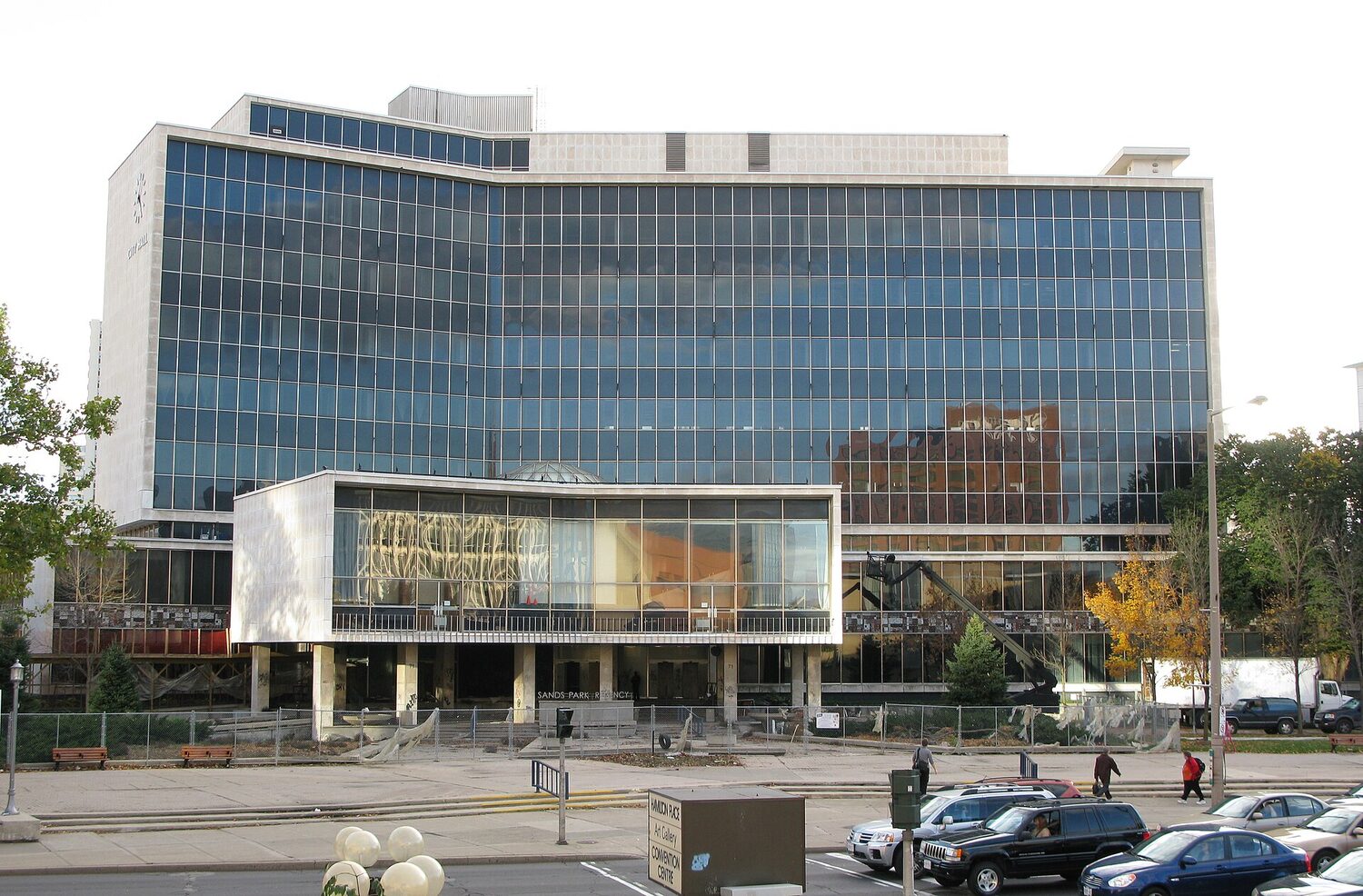
As you walk the core, you'll cross Hamilton's rainbow crosswalks — at City Hall (Main St W & Summers Lane) and where King William Street (the restaurant row) meets Ferguson Avenue — painted in the Pride and Progress/Trans-flag colours.
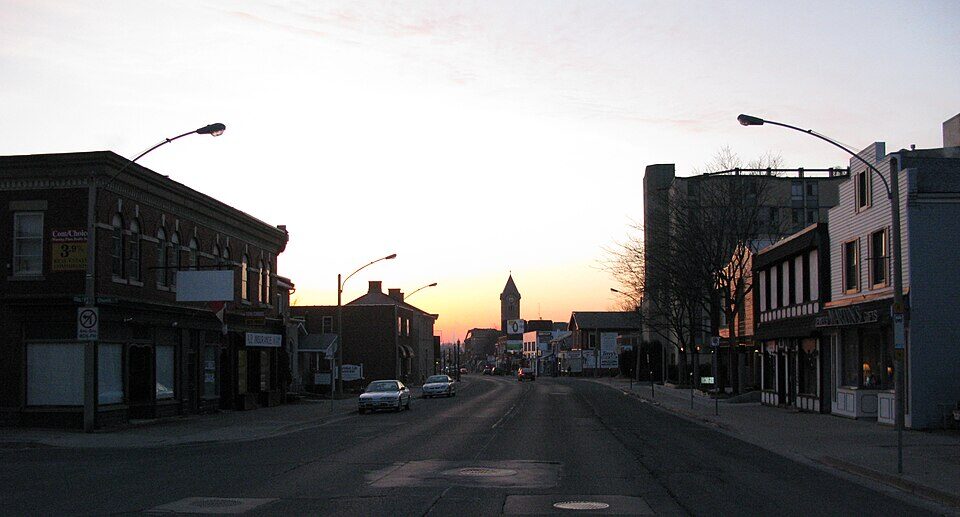
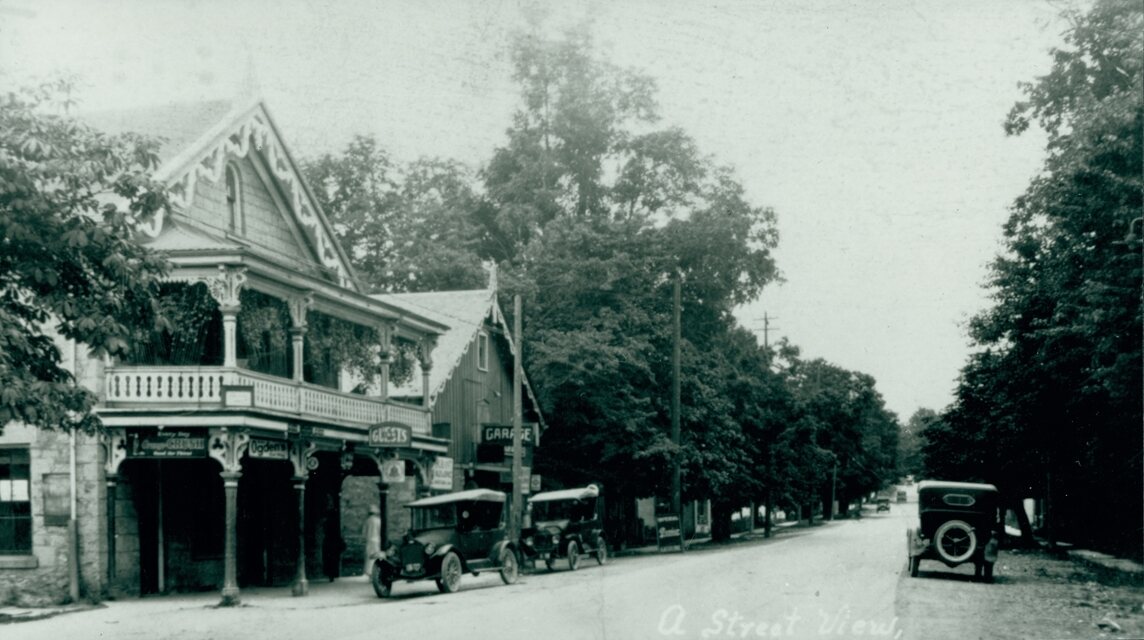
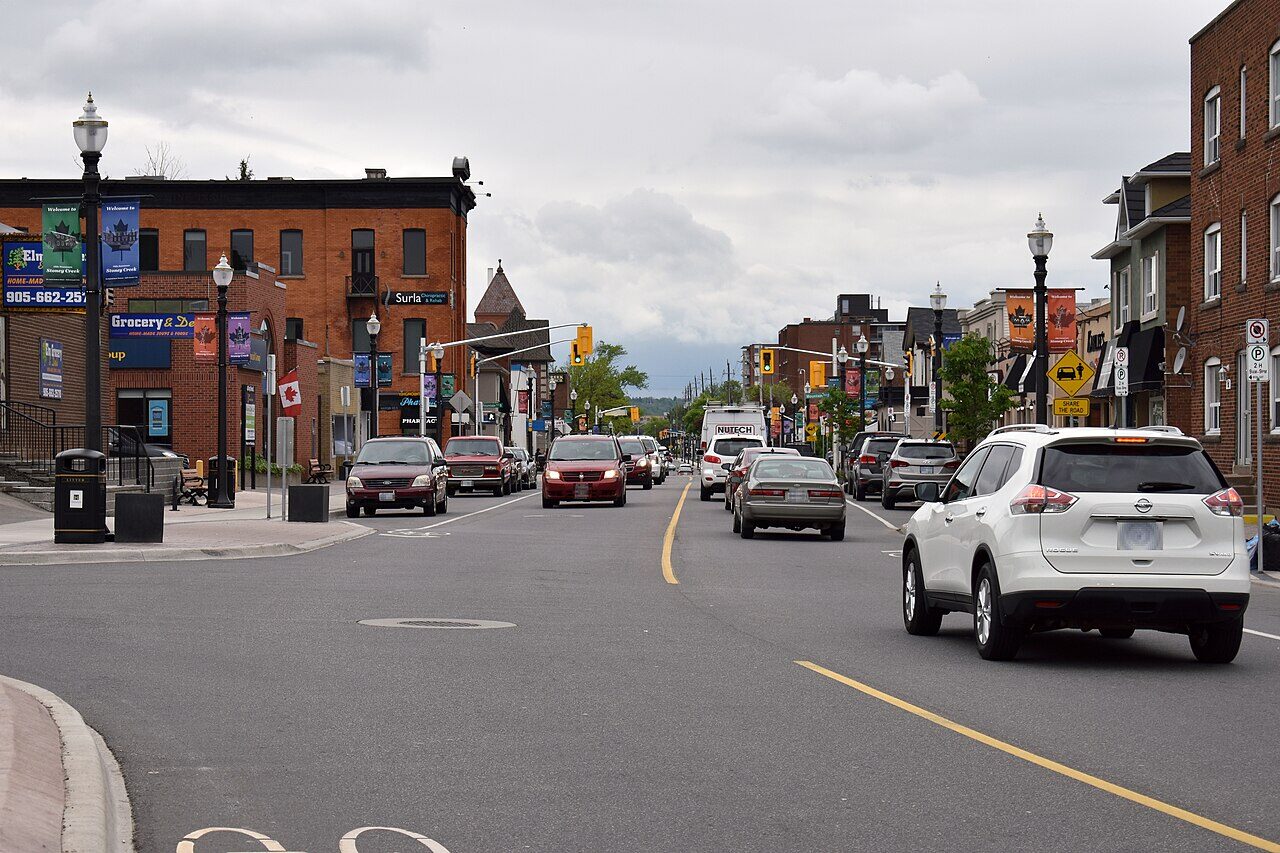
Today's Hamilton is really many communities in one. The 2001 amalgamation joined the old city with the historic towns of Dundas, Ancaster, Stoney Creek, Flamborough and Glanbrook — each with its own main street and character. Closer in, the lower city is a patchwork of walkable urban villages: Westdale by the university, Kirkendall around Locke Street, Corktown, Crown Point along Ottawa Street, and the North End down by the water. If you only have an hour between sessions, pick a street and wander.

The city's creative spine — galleries, indie shops and cafés. Your Friday lands on the monthly Art Crawl (second Friday): from about 5 PM, James North between York and Murray closes to traffic and fills with art, music and food. A short walk from the hotel.

A heritage strip of Victorian storefronts — boutiques, bakeries, antique shops and restaurants. The most pleasant browse-and-graze street in the city — easy to pair with dinner.

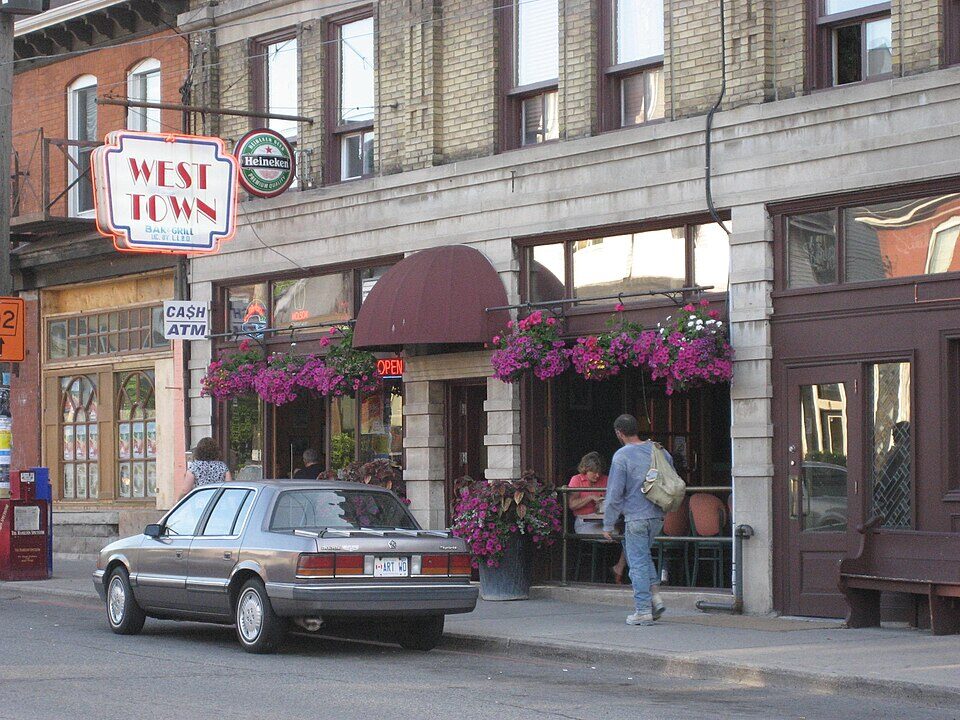
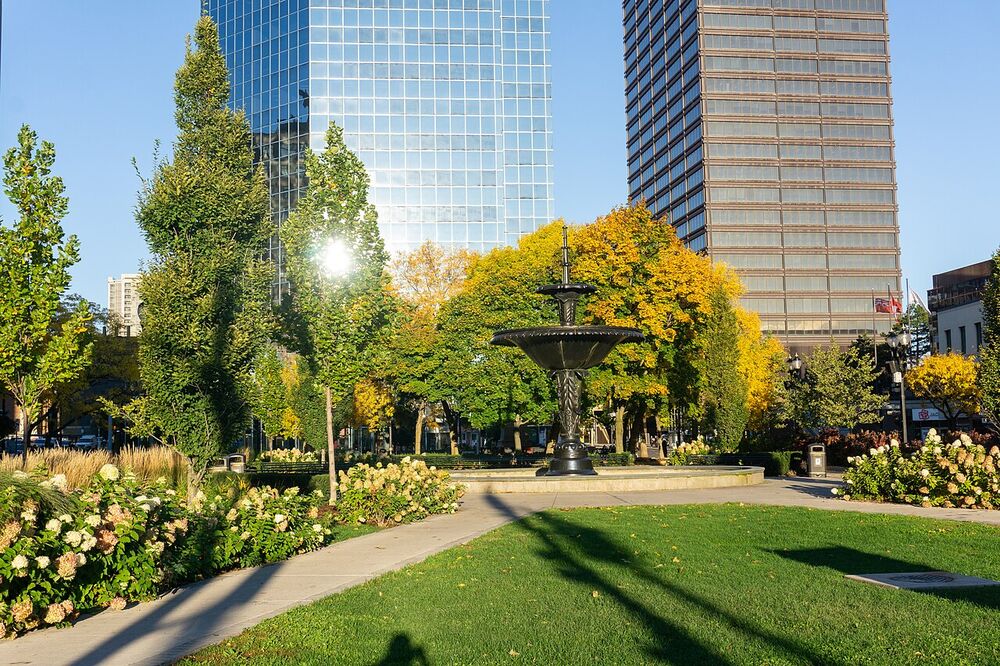
Hess is a cobblestone cluster of converted Victorian houses turned patios and pubs — the downtown evening gathering spot. Gore Park, a few blocks east, is the city's leafy central square with its historic fountain.

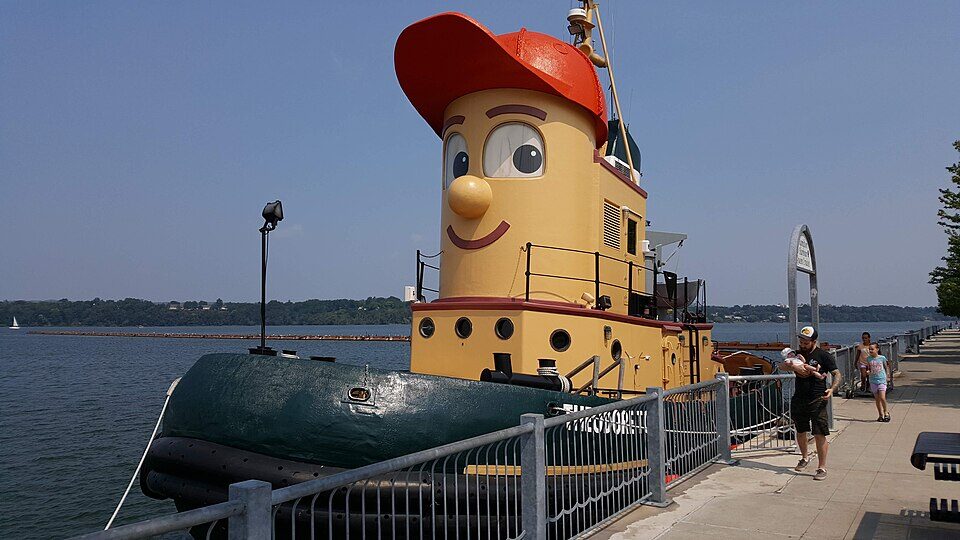
A working harbour reborn: a long waterfront trail, a pier-side promenade, a carousel and patios — and Theodore Too, the full-size smiling tugboat from the kids' show, when she's in port. A narrated Harbour-West trolley loops the waterfront past HMCS Haida. Grab a coffee or lunch at Williams Fresh Café on Pier 8; from the Sheraton it's about a 25-minute walk down to the water, or a five-minute drive.

The most storybook of Hamilton's communities: a historic main street (King Street West) of independent shops, cafés and pubs tucked beneath the escarpment, minutes from the Dundas Valley trails. Well worth the short drive.

One of Upper Canada's oldest inland settlements (the 1790s), and it still feels like a village — a leafy, historic main street along Wilson Street of cafés, boutiques and old stone buildings, with the storied Ancaster Old Mill (a restaurant in a 1790s mill beside its own waterfall) just below. The gateway to Tiffany and Sherman falls and the Dundas Valley trails.

Hamilton's east end, where the city meets the escarpment. Its claims to fame run deep: the 1813 Battle of Stoney Creek (Battlefield House and its 100-ft monument), the dramatic Devil's Punchbowl falls and ridge-top views over the lake, and the Erland Lee Home where the Women's Institute was born — with an old-fashioned ice-cream stop or two along the way.

Hamilton's Textile District — blocks of fabric, antique and home shops — with a slice of Canadiana on the corner: the very first Tim Hortons opened here on May 17, 1964. Store No. 1 still pours coffee at 65 Ottawa St N.
Hamilton sits in good golf country — the Niagara Escarpment and its wooded valleys shape genuinely scenic, very playable layouts, in the city and out toward Ancaster and the countryside. If a free morning opens up (or you're making a weekend of it), these are the public courses you can simply book a tee time at — starting with the two run by the City, minutes from the hotel.

Public · two 18-hole courses · escarpment-edge
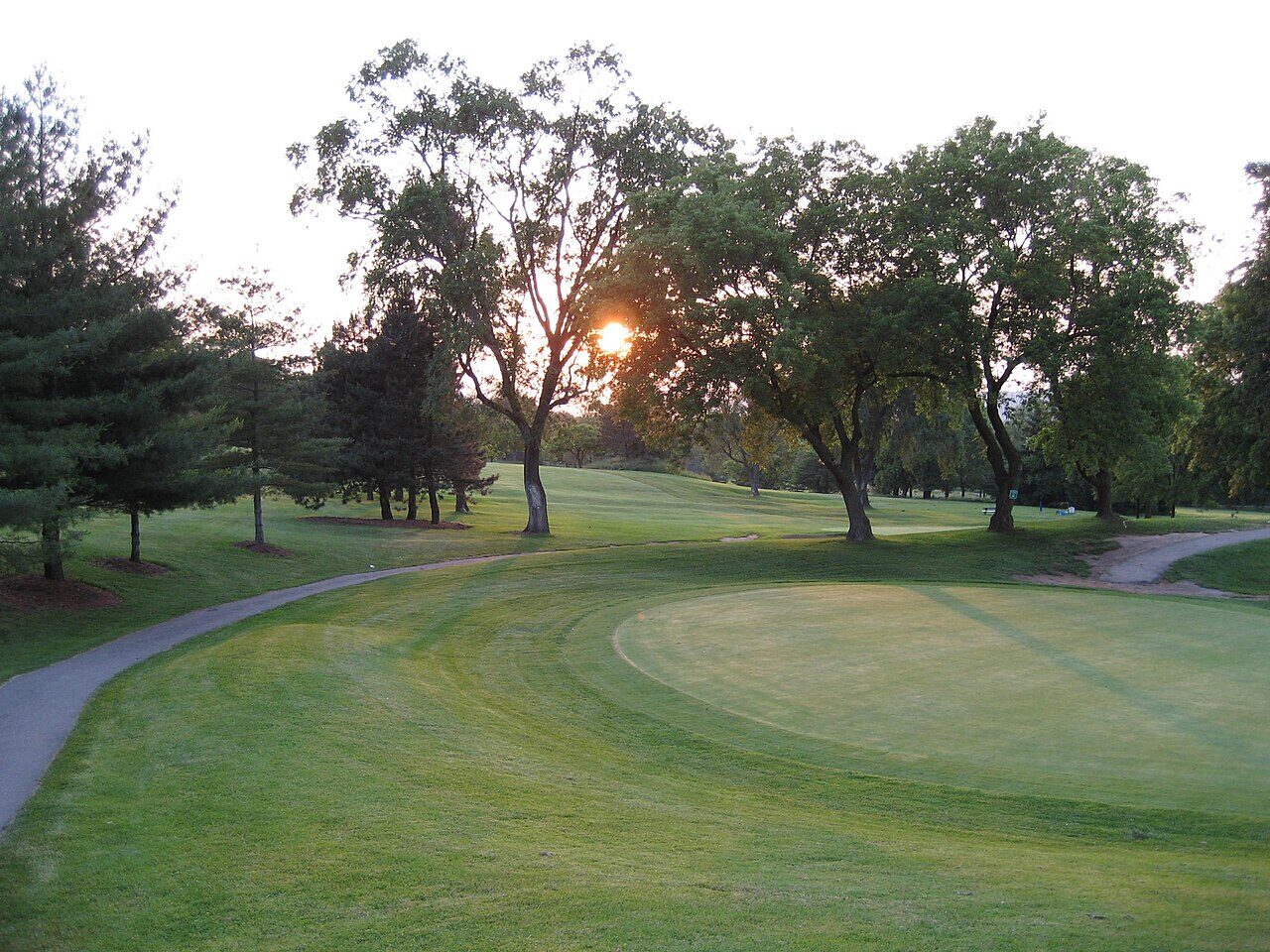
The City's flagship golf — two mature, tree-lined 18-hole courses set against the escarpment brow, barely a few minutes from the core. The longer Martin and the tighter, shorter Beddoe are both walkable and forgiving enough for a mixed-ability group. The closest real round to the hotel.

Public · 18 holes · Red Hill Valley
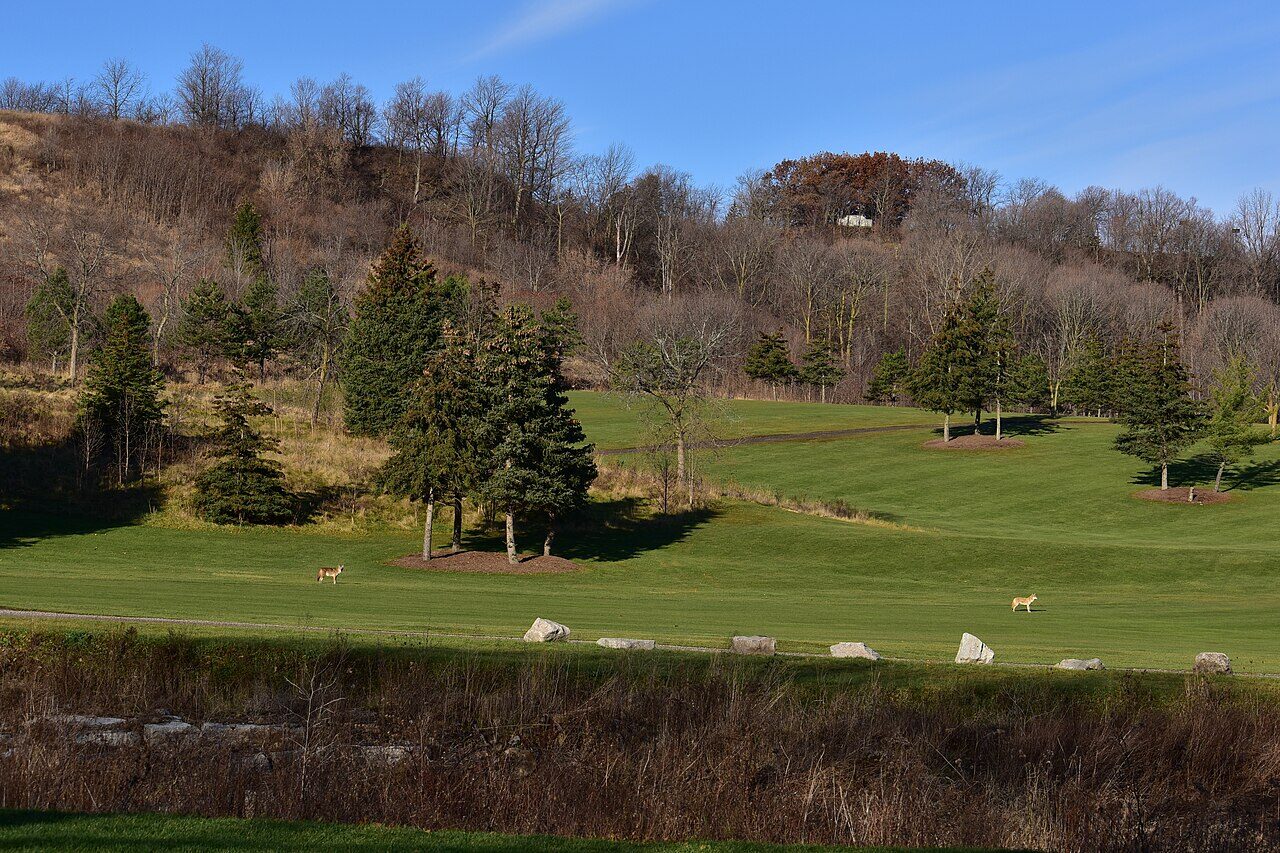
The City's other course threads the wooded Red Hill Valley at the foot of the escarpment — a handsome, well-regarded 18 with real elevation changes and creek crossings. A short drive east of downtown, and a prettier walk than its city setting suggests.
Public · two 18-hole courses · Ancaster
Ancaster's friendly public club has two full 18s — the established Old Course and the newer New Course — across rolling, mature parkland on the edge of town. Easy online booking and public green fees; a relaxed, well-kept choice a quick drive up the hill.
Public · Ancaster · Oak & Maple courses
A long-running, welcoming public course on Wilson Street West in Ancaster — gently rolling, approachable golf with a teaching academy attached. Daily-fee and open to all; an easy round or a place to warm up the swing.
Public · daily-fee · Ancaster
A big, modern daily-fee course in Ancaster — a wide-open, championship-length Tom Pearson layout (par 72, 7,365 yards from the tips) with room to swing. GolfNorth-run and fully public, with easy online booking.
Public · 18 + a shorter nine · Copetown
A friendly, well-kept public club in the rolling countryside northwest of the city — a full 18 plus an executive nine, generous fairways and a warm welcome. Online tee-time booking, seven days a week; in peak season the first groups go off around 6:30 AM.
Public · easygoing · Mount Hope
A relaxed, good-value public course in the countryside south of the city near the airport — well-kept greens and an unfussy, friendly vibe. An easy round if you just want to get out and play.
June is peak season — reserve ahead. The City's two courses (Chedoke and King's Forest) share one booking system: book online through the City of Hamilton or call 905-521-3970. Everything listed here is open to the public — no membership required.